Sourdough Baguettes – Attempt #3 (Part 2)

“Flexibility is the key to AirPower” said Italian airpower theorist Gen. Giulio Douhet. It was one of the first tenets taught to me as a cadet at the US Air Force Academy.

I guess it also applies to bread making.

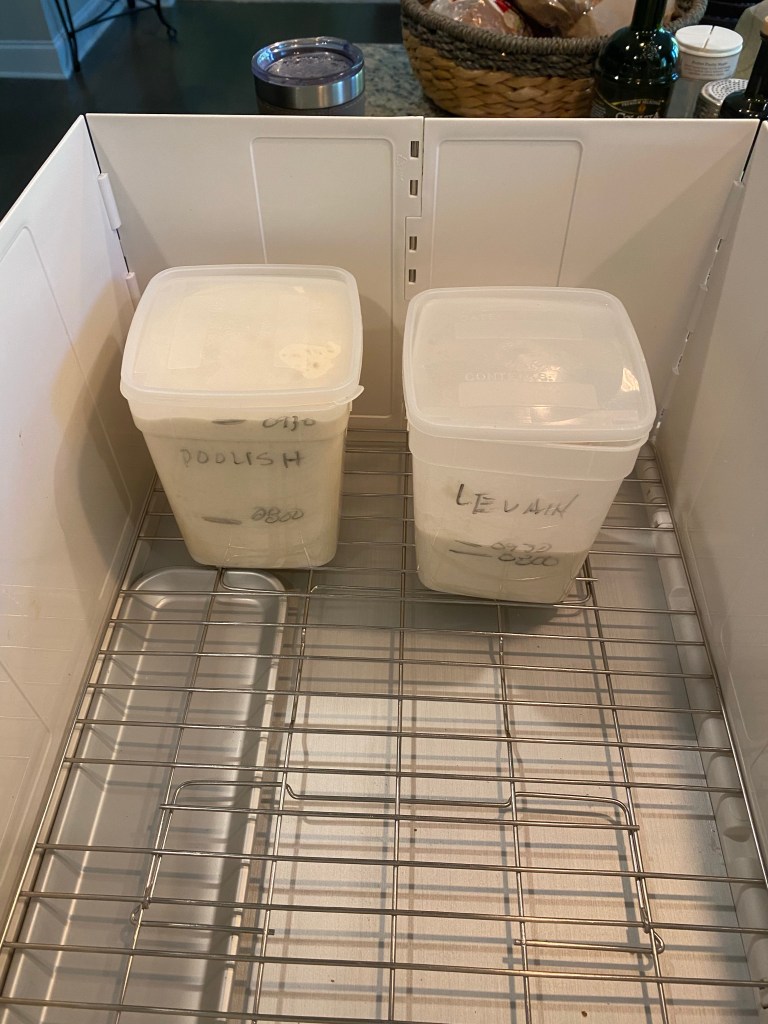
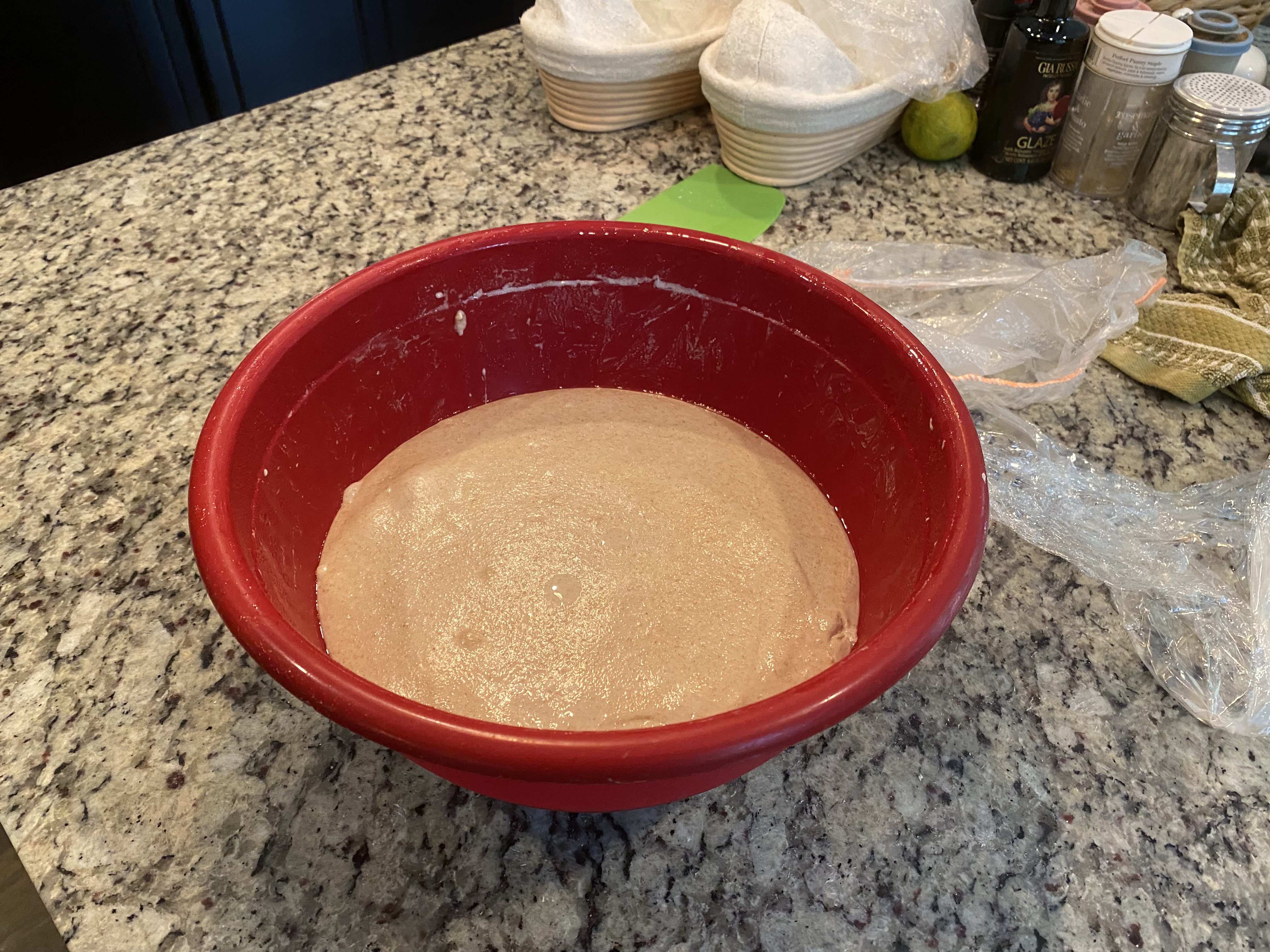
My Poolish was rising at a much faster rate than my Leaven.

Next time I will use differs temps for both (e.g. 75°F for the Poolish and 80°F for the leaven). I’ll also mix my leaven at a 1:1:1 ratio not the 1:10:10 ratio…need a higher percentage of active starter to grow faster.

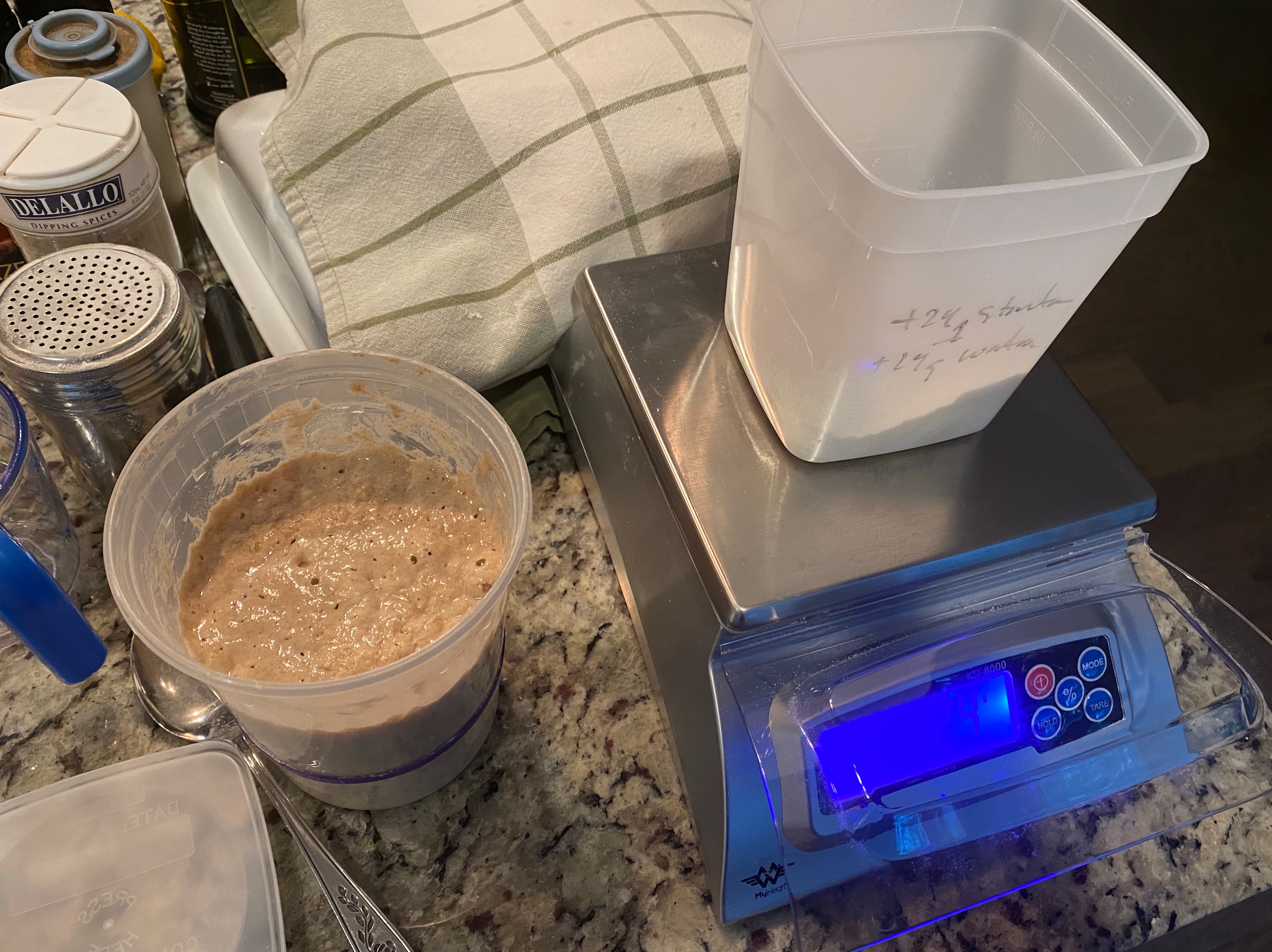
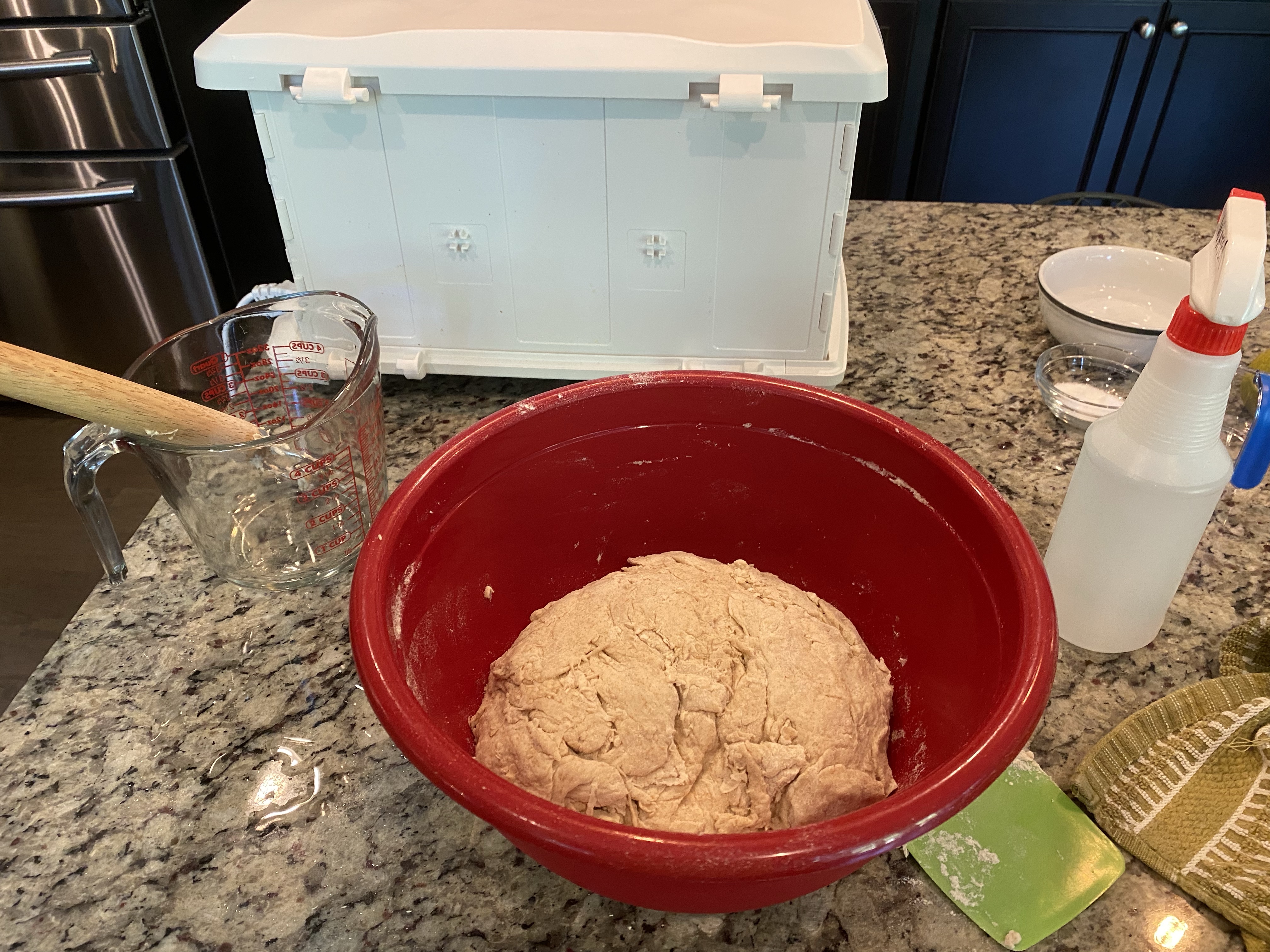
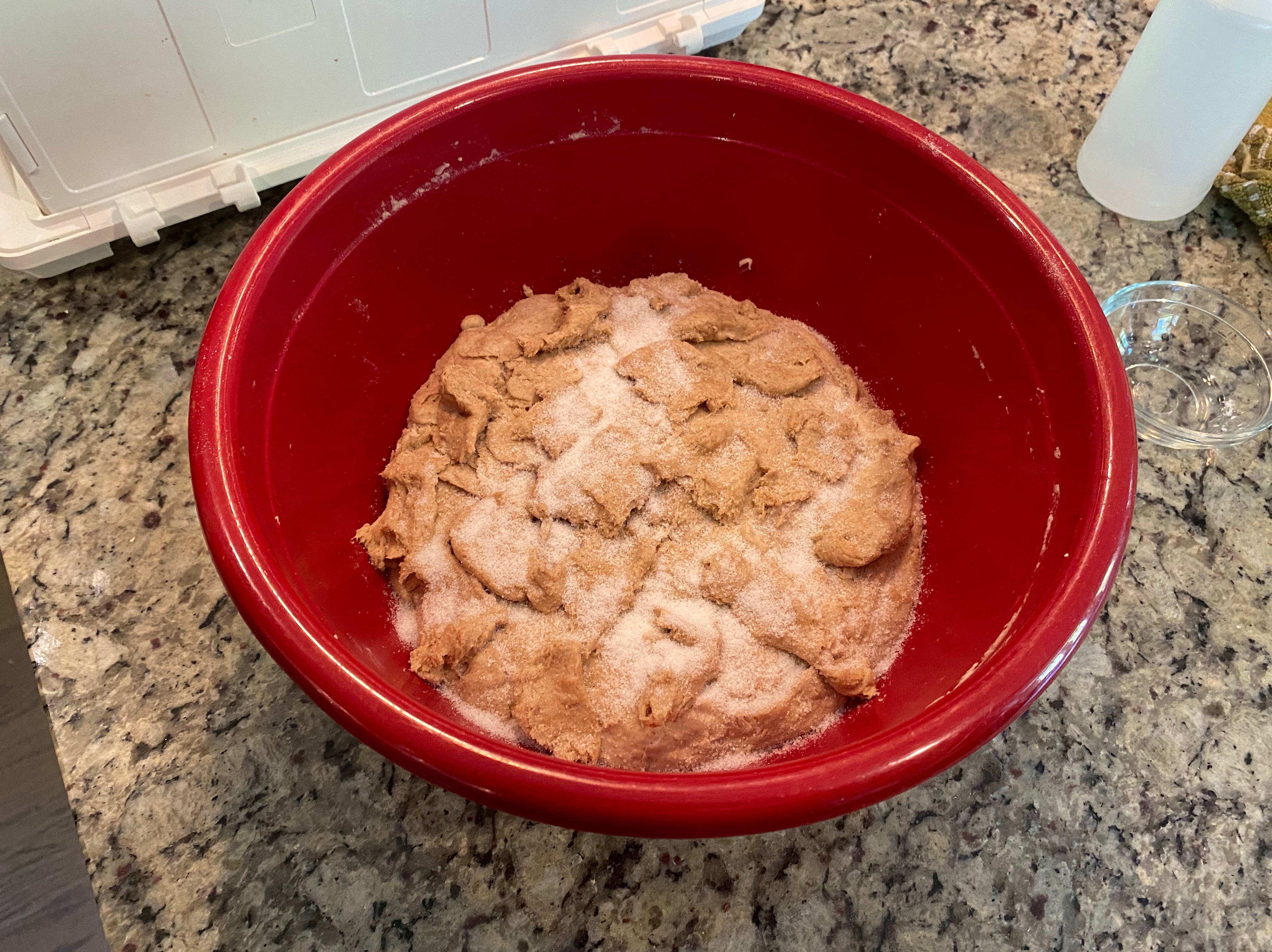
I could only wait until 1015 and then decided I needed to mix the Poolish into my main flour. When I realized I needed to adjust my method I decided to start the autolyse immediately. I figured 30 minutes would be better than none!

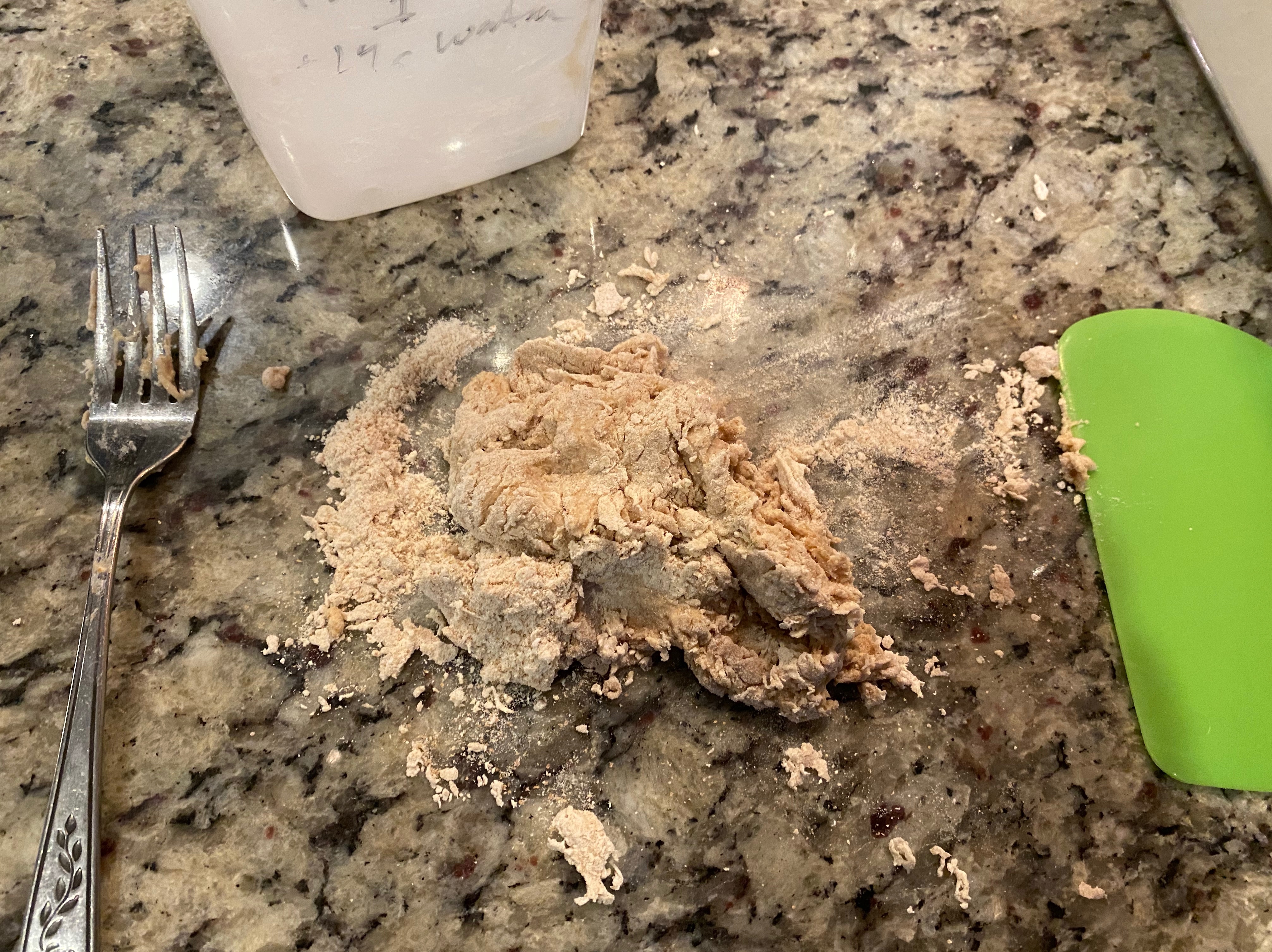
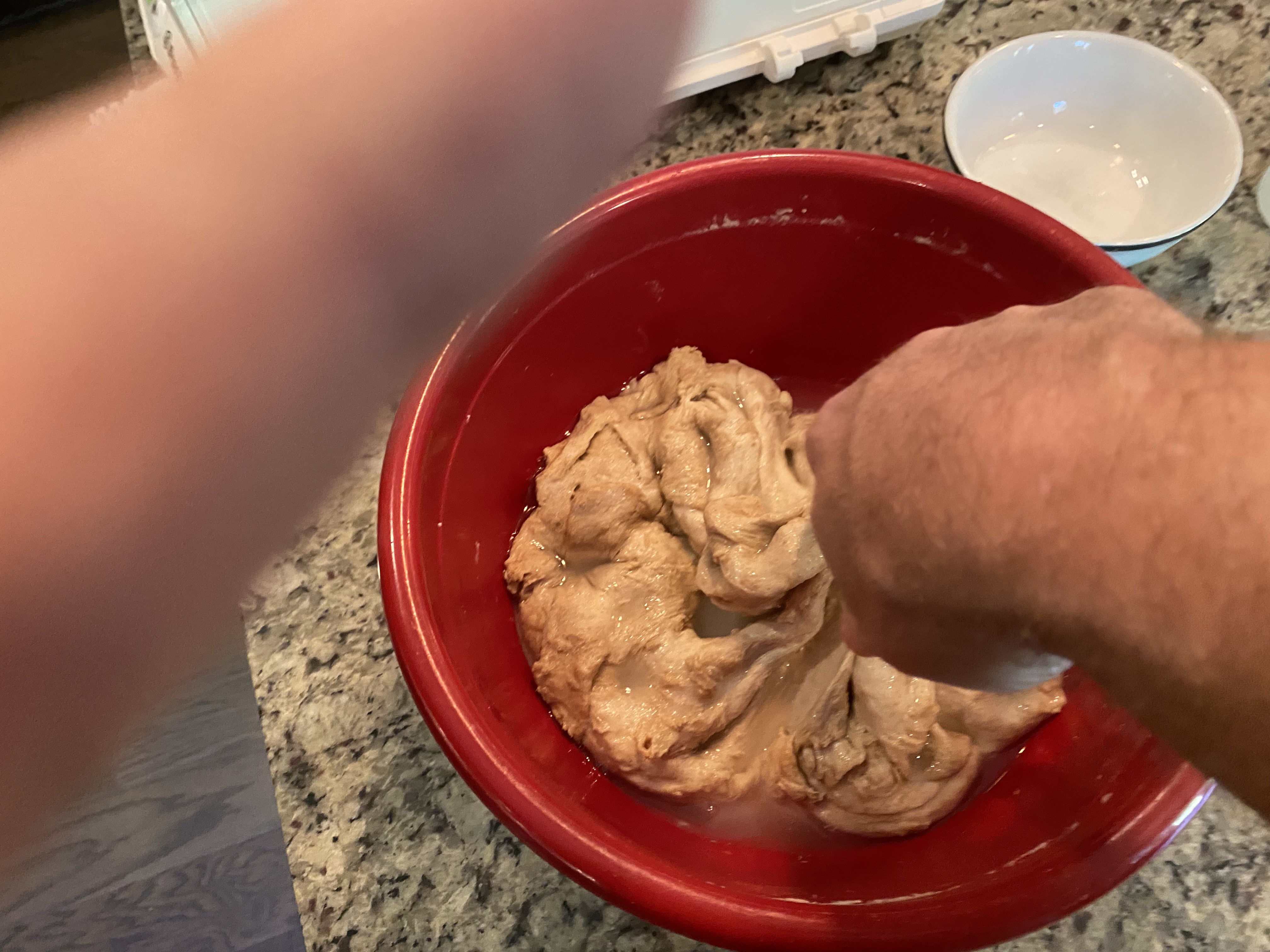
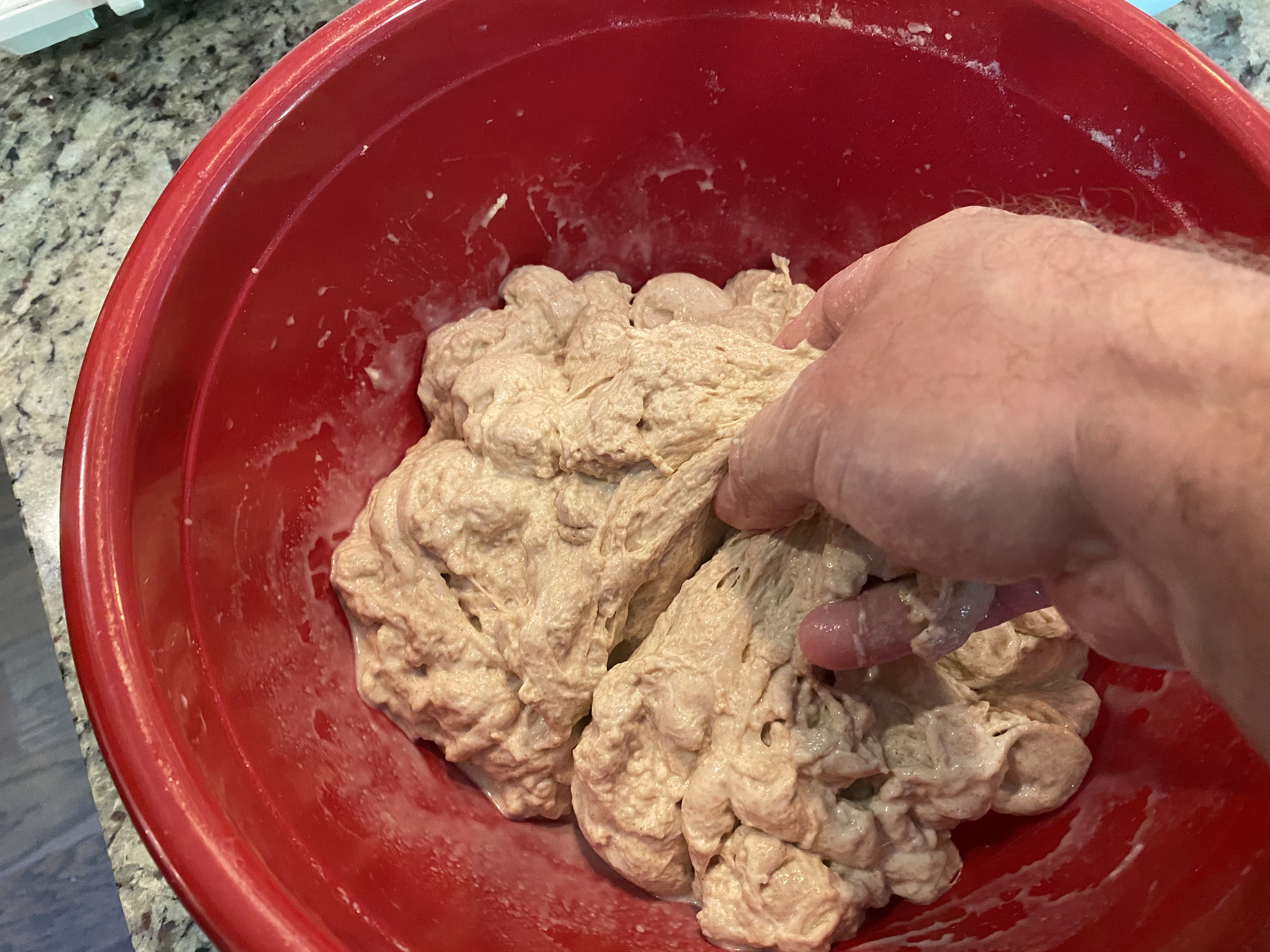
Squeezing in Poolish

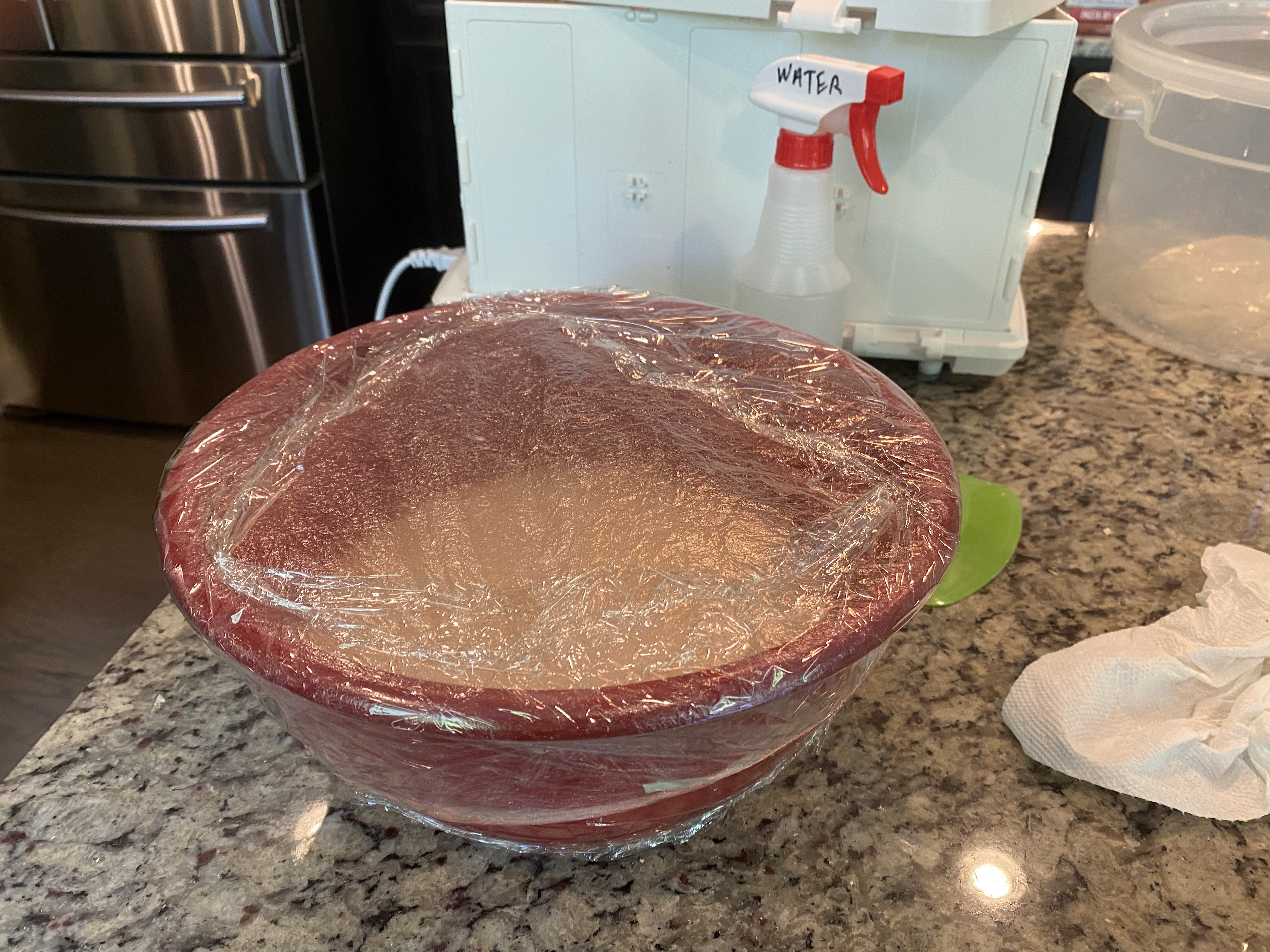
I hand mixed the Poolish just enough to incorporate and let it sit until Noon. This was roughly 4 hours after I’d mixed the Leaven and Poolish mixtures. My Leaven by this point had grown by about 2/3. This was the clue that next time I’d use a ratio of 1:1:1 instead of the 1:10:10.
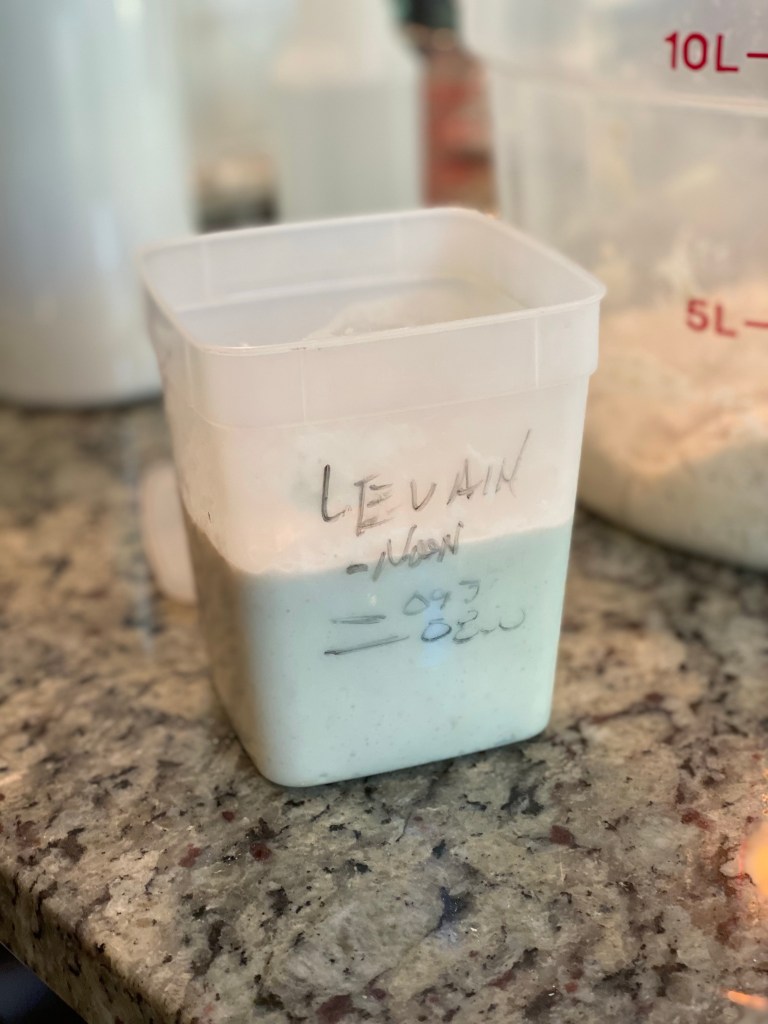
Leaven risen by two-thirds

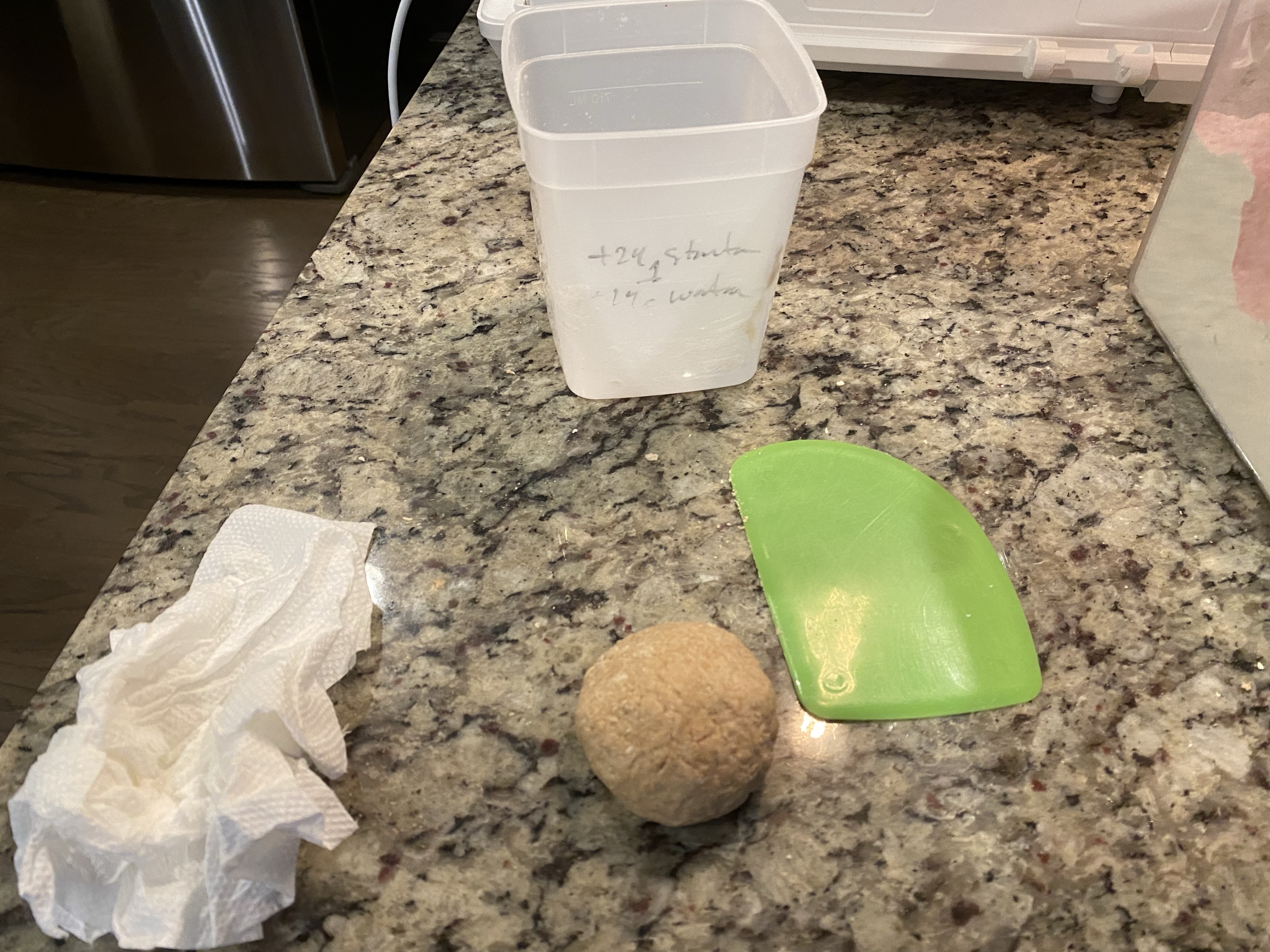
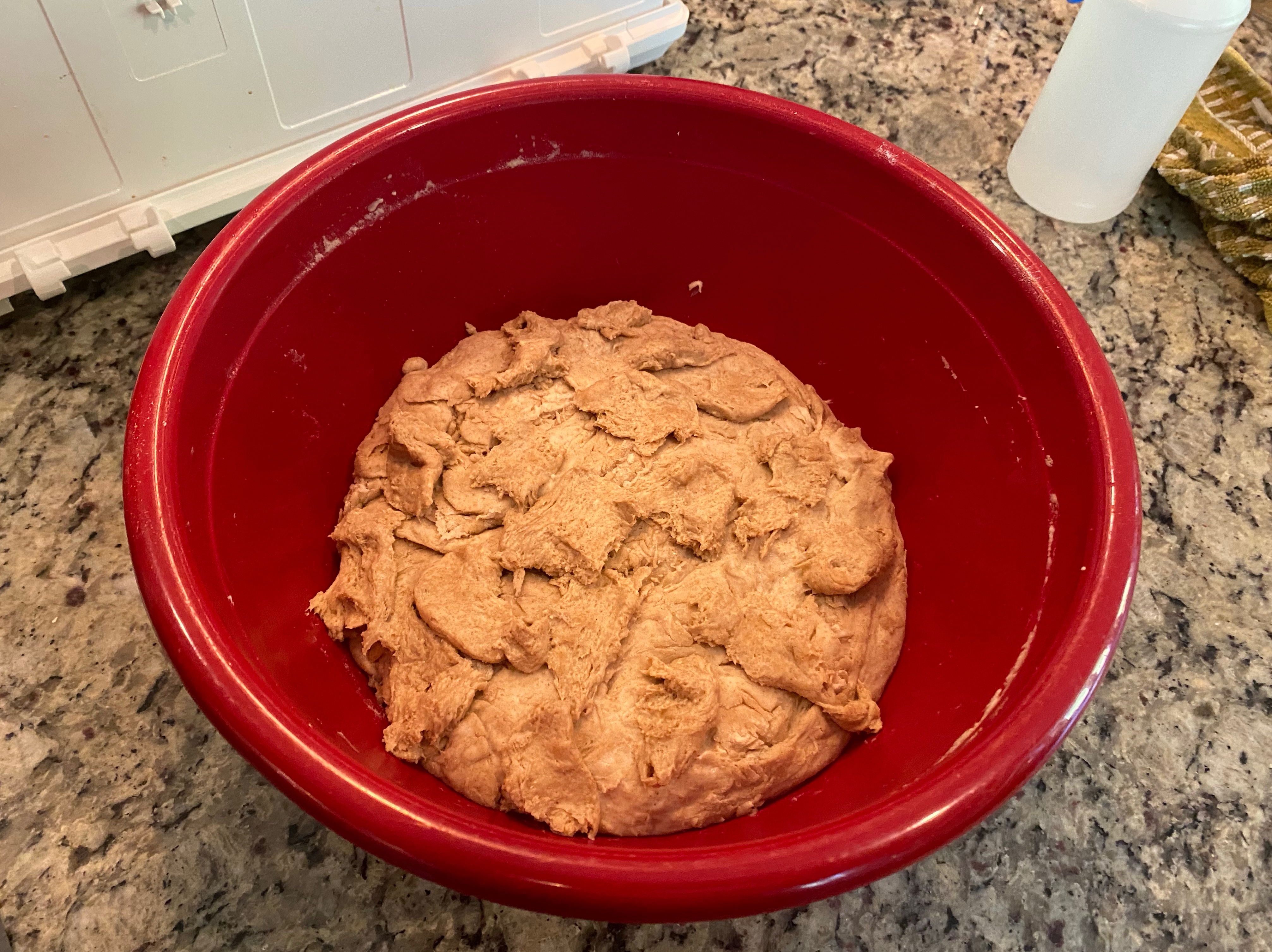
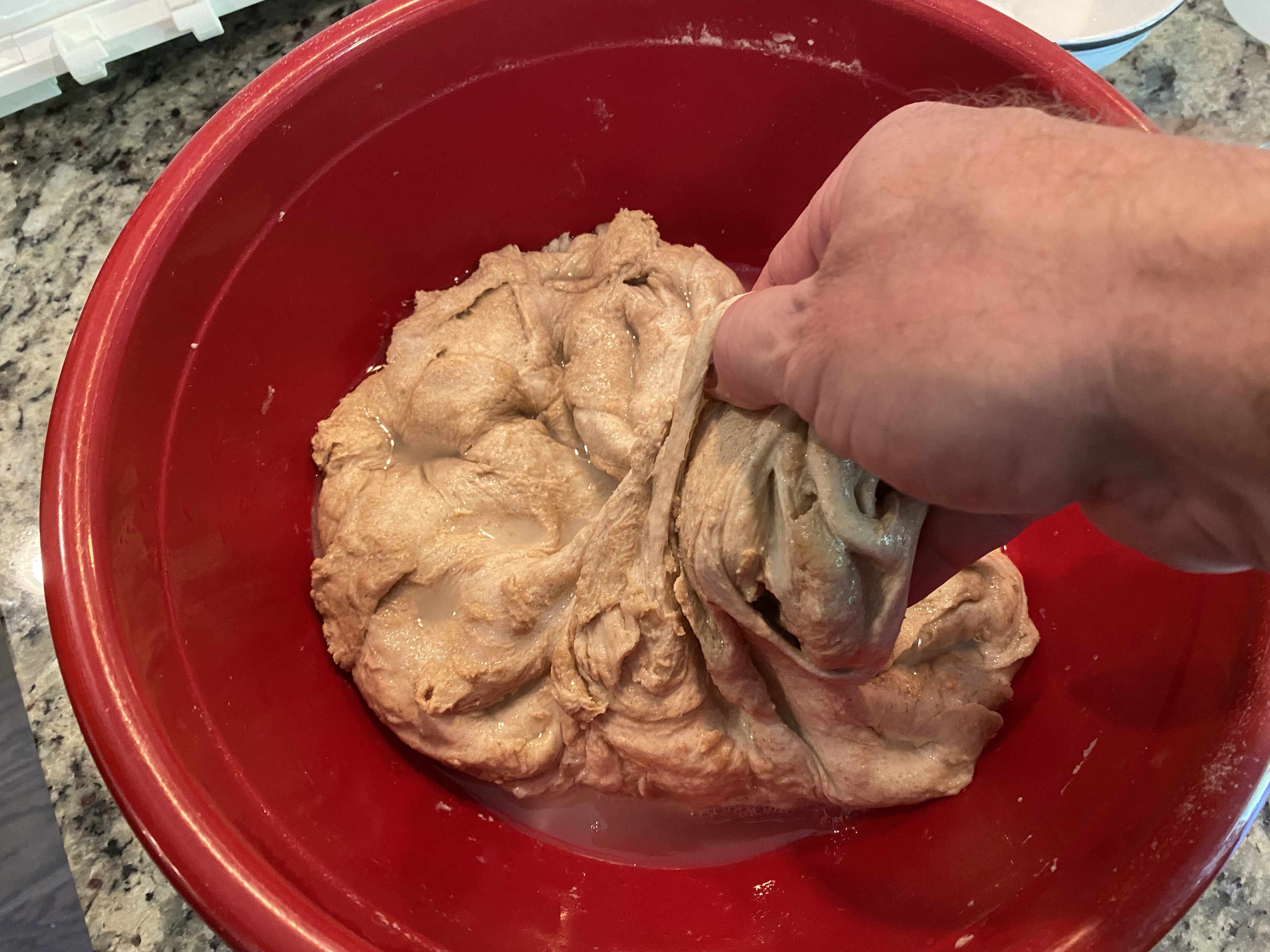
I squished in my leaven in a similar manner to the Poolish (video above). I then set my timer for 20 minutes to let it rest before I added the salt.

Adding Salt

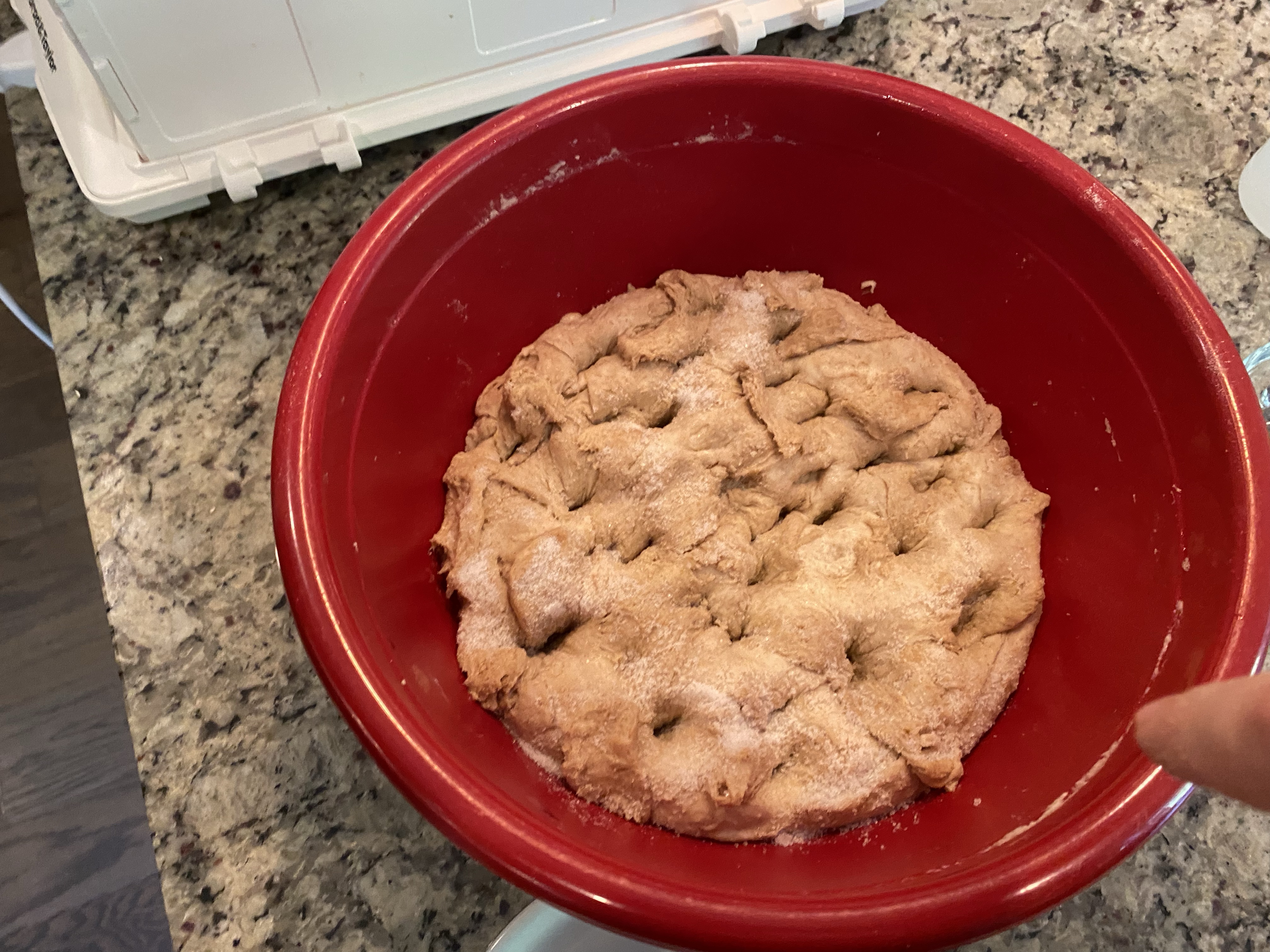
I simply sprinkle the salt on and squished it in. It feels gritty and I’m looking for a general consistency in the grittiness… not some places that are more so and others that have none.

I’ll wait for about 30 mins and cut off a piece to stick in my Aliquot jar to judge the bulk ferment rise. At that time I’ll start my coil folds.

Think I’m

Back on track…

Sourdough Baguettes – Attempt #3

Well trying again…. This is already turning out interesting.

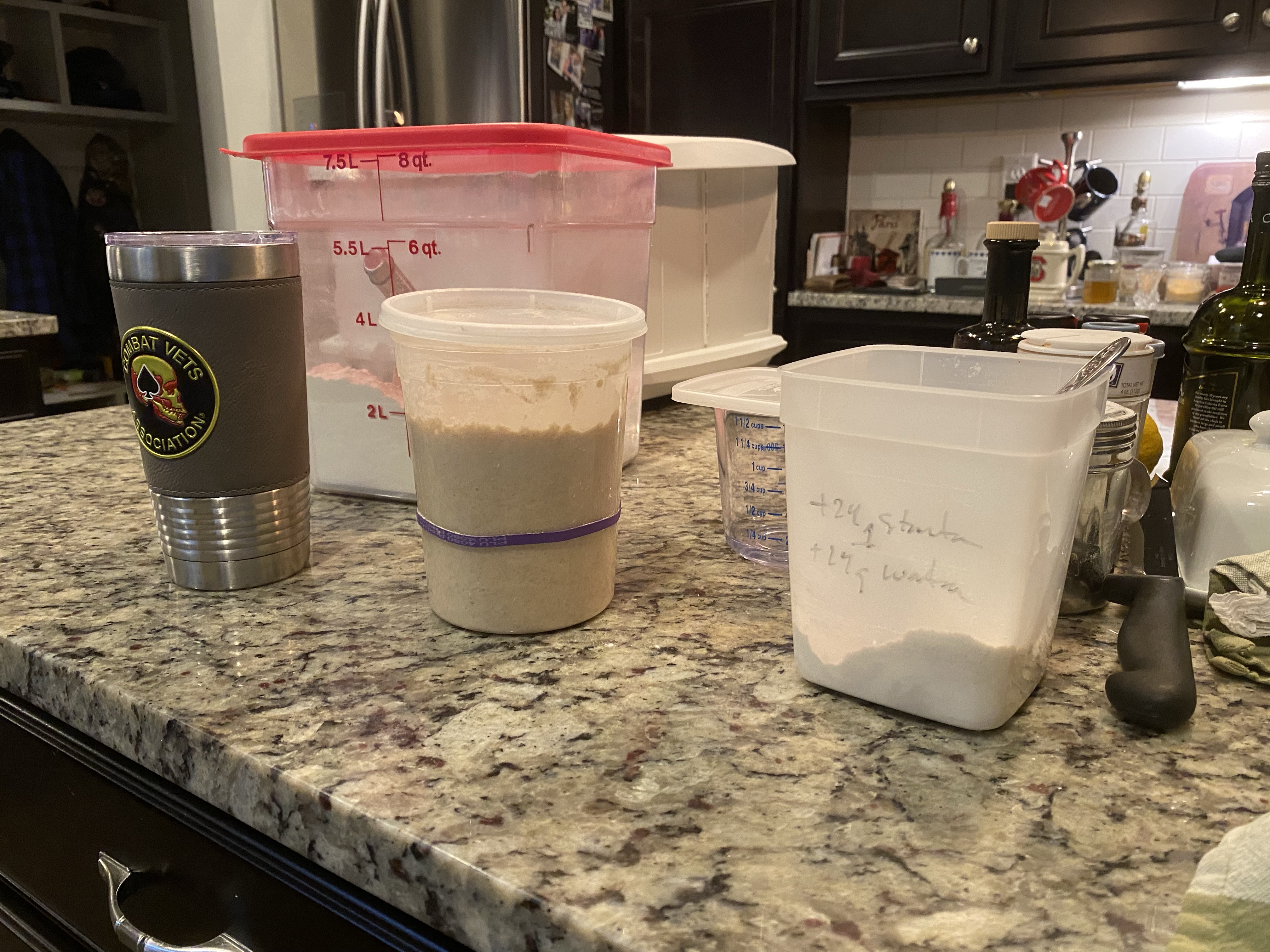
Mixed the Poolish and Levain today and decided to make the temp of the mix 80°F.

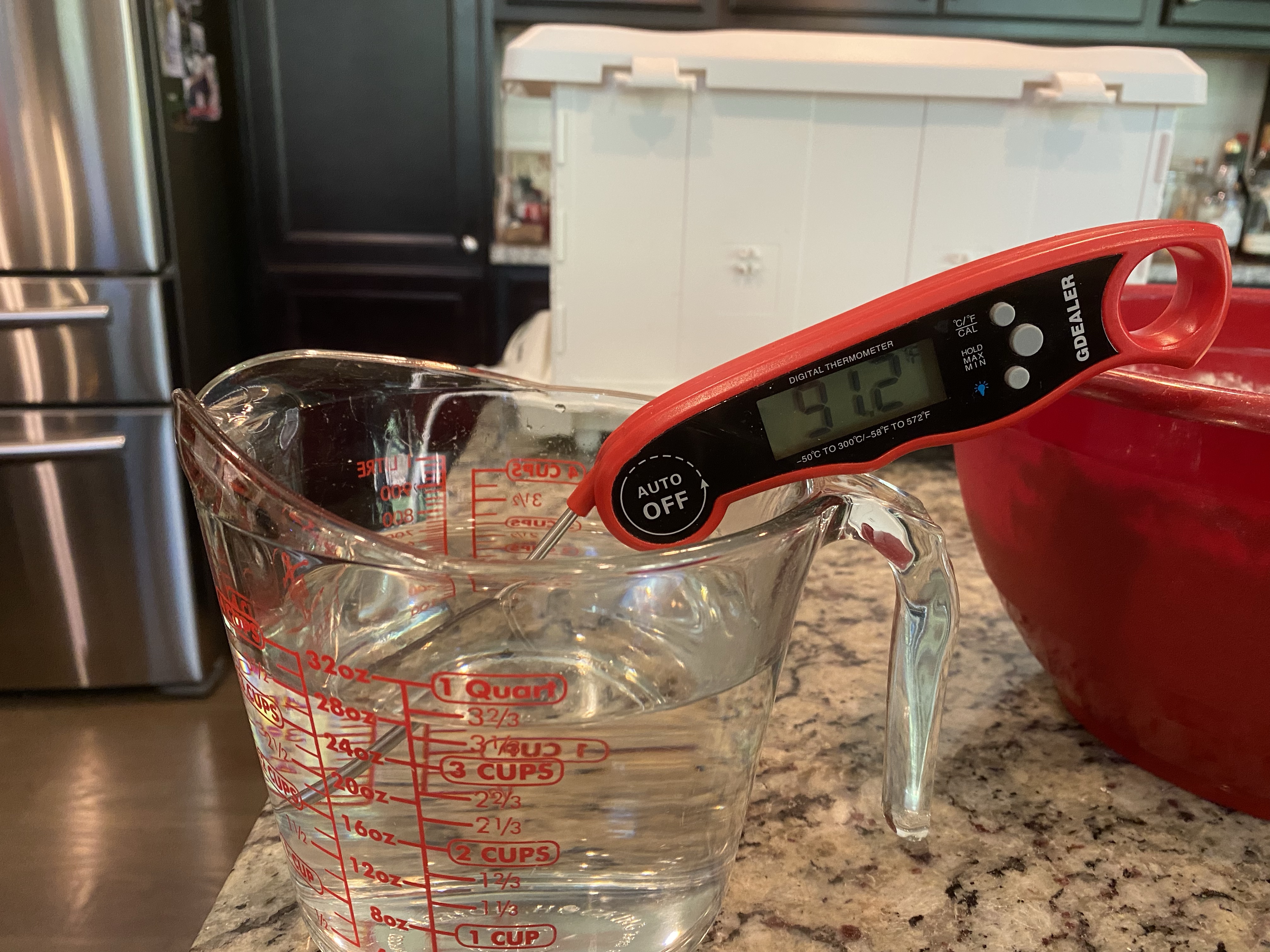
My flour was 74.5°F I thought I’d make the water temp 85°F. Both weights of flour and water were 200g … the average would be ~ 80°F.
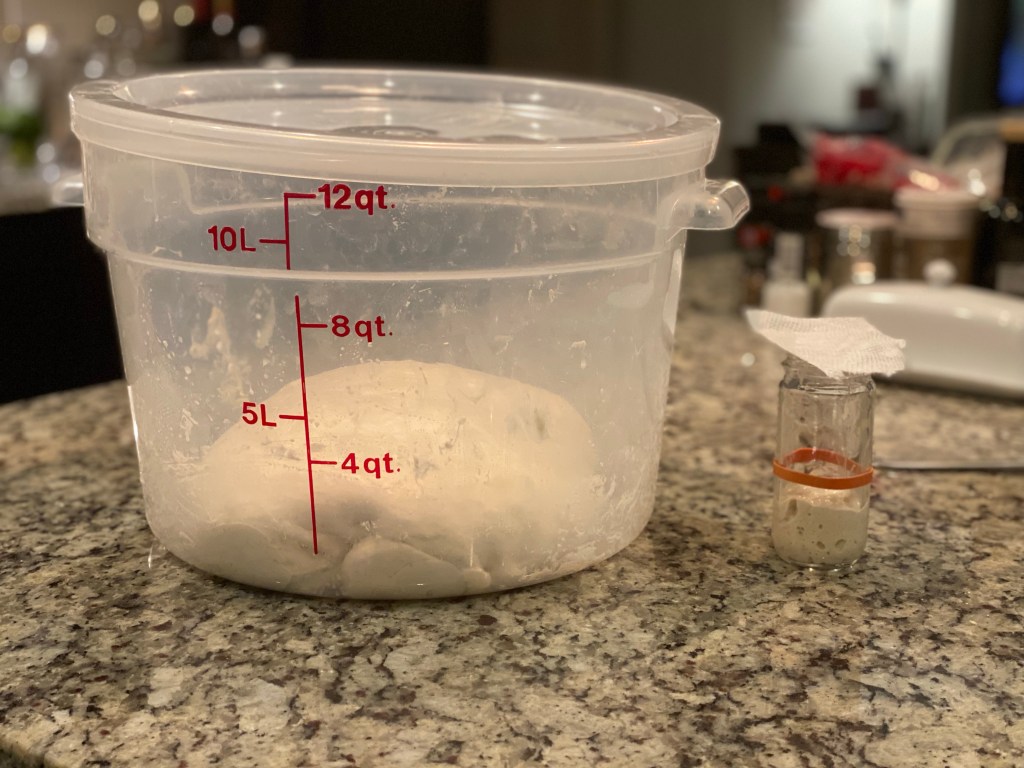
I microwaved my water and got it too hot (96°F). I cooled down to 88°F with an ice cube. Frankly, I got impatient. Anyway, the resulting temps were 83°F. Pretty close…

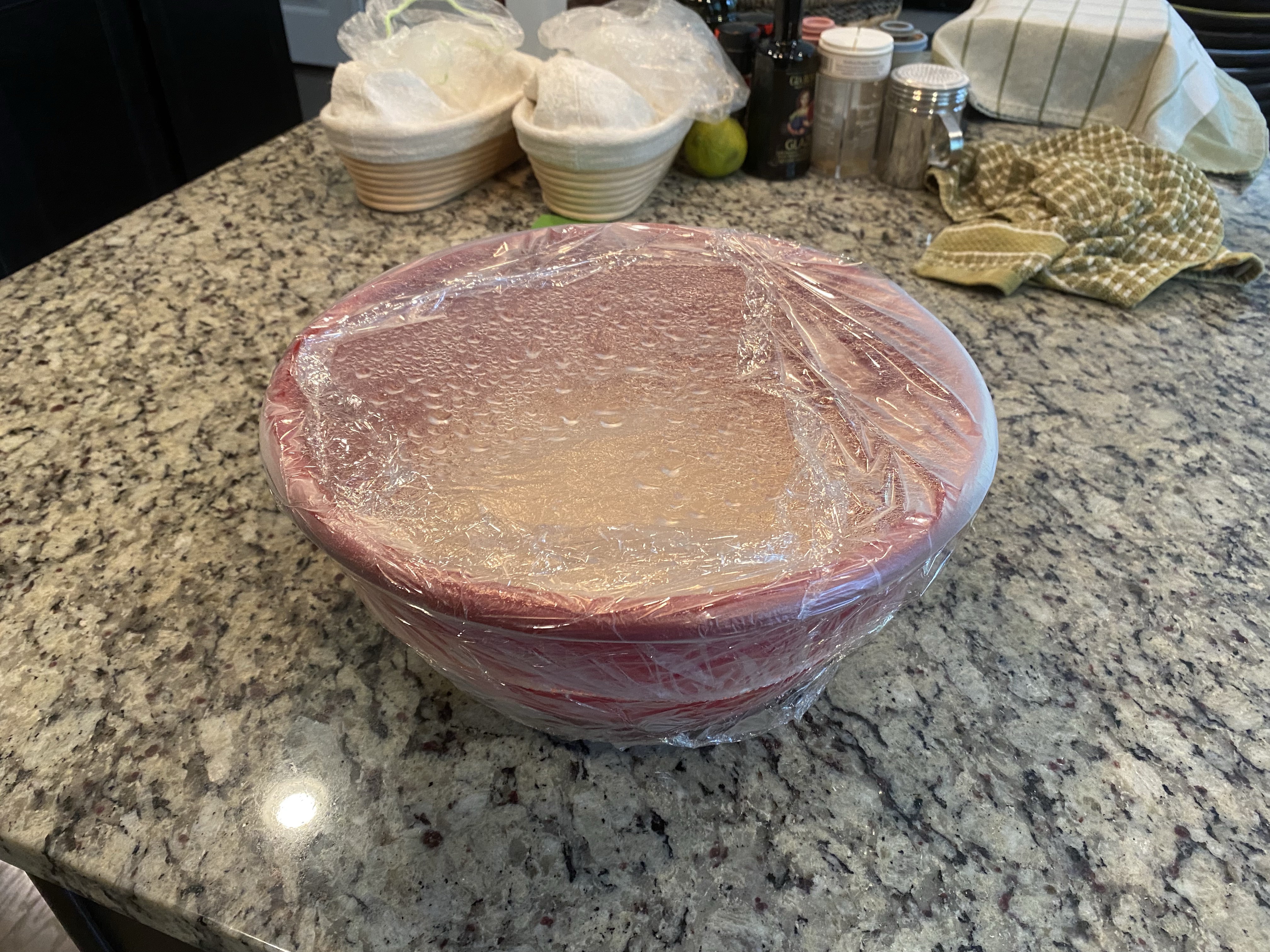
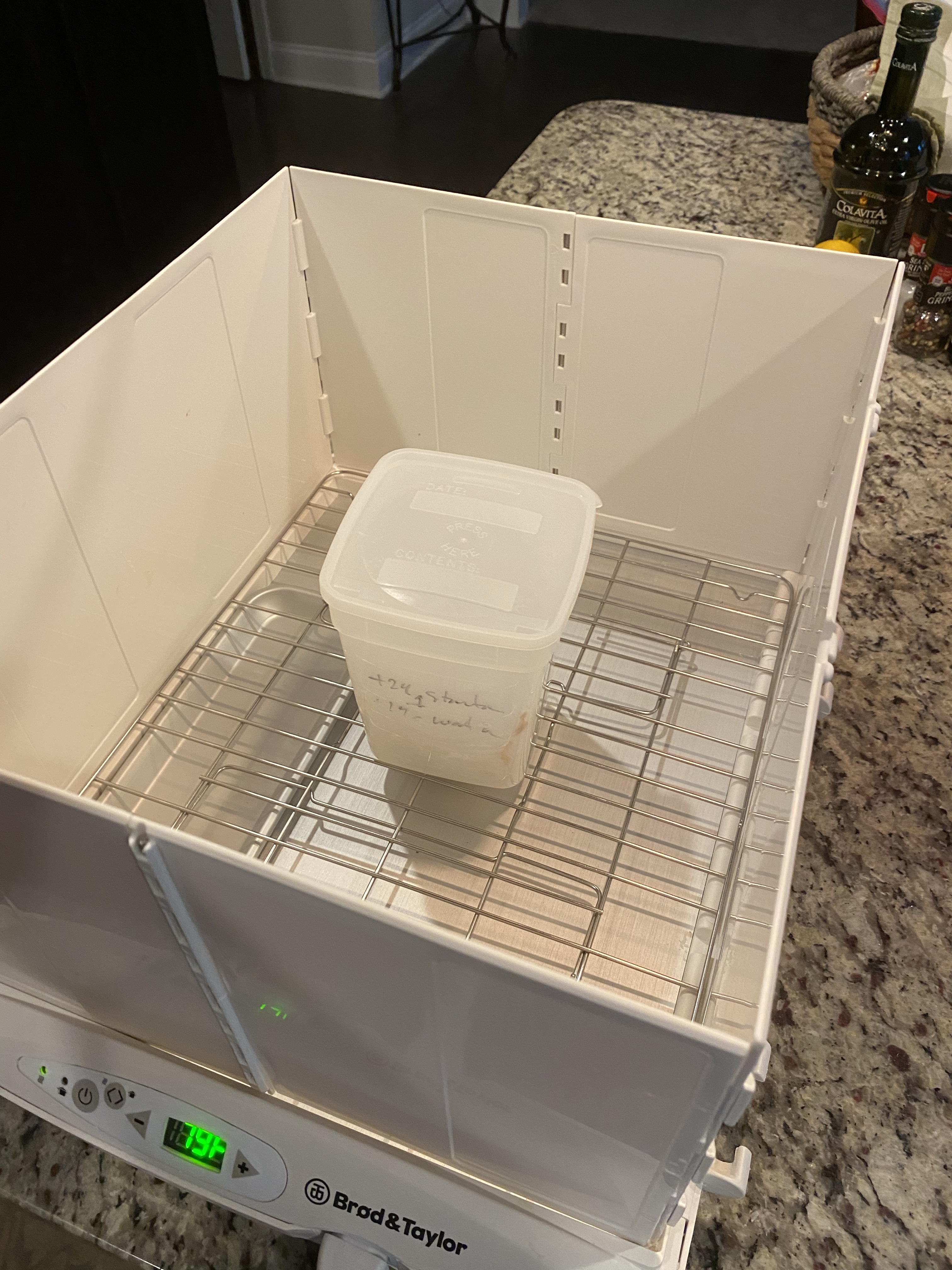
I dropped them both into my proving box at 80°F

Poolish and Leaven Mixed

Here’s the wrinkle…

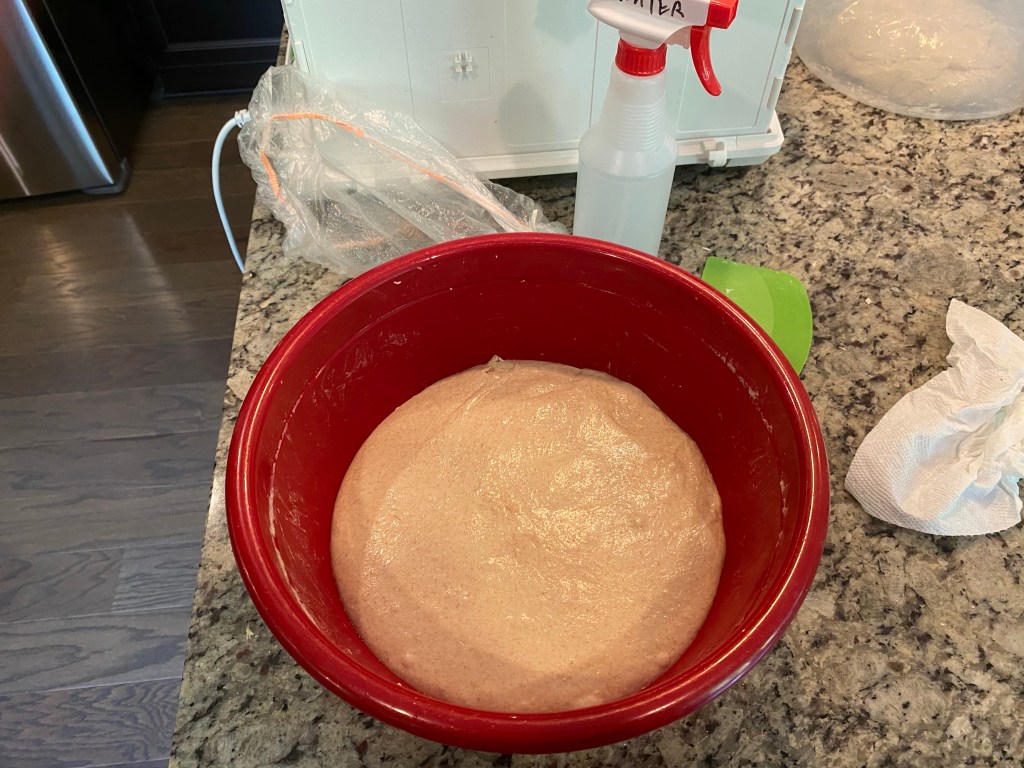
At 0930 (1 hour 15 minutes later) my Poolish is almost 1.5x bigger and my leaven is maybe 10% grown! Oops.

About an hour later

This was me not carefully following method.

If I’d read more closely I would have noted I should have used 75°F for the Poolish and 80°F for the Leaven. I should also have had them NOT in the Proving Box…do them at room temp.

The result would be them growing at a closer rate.

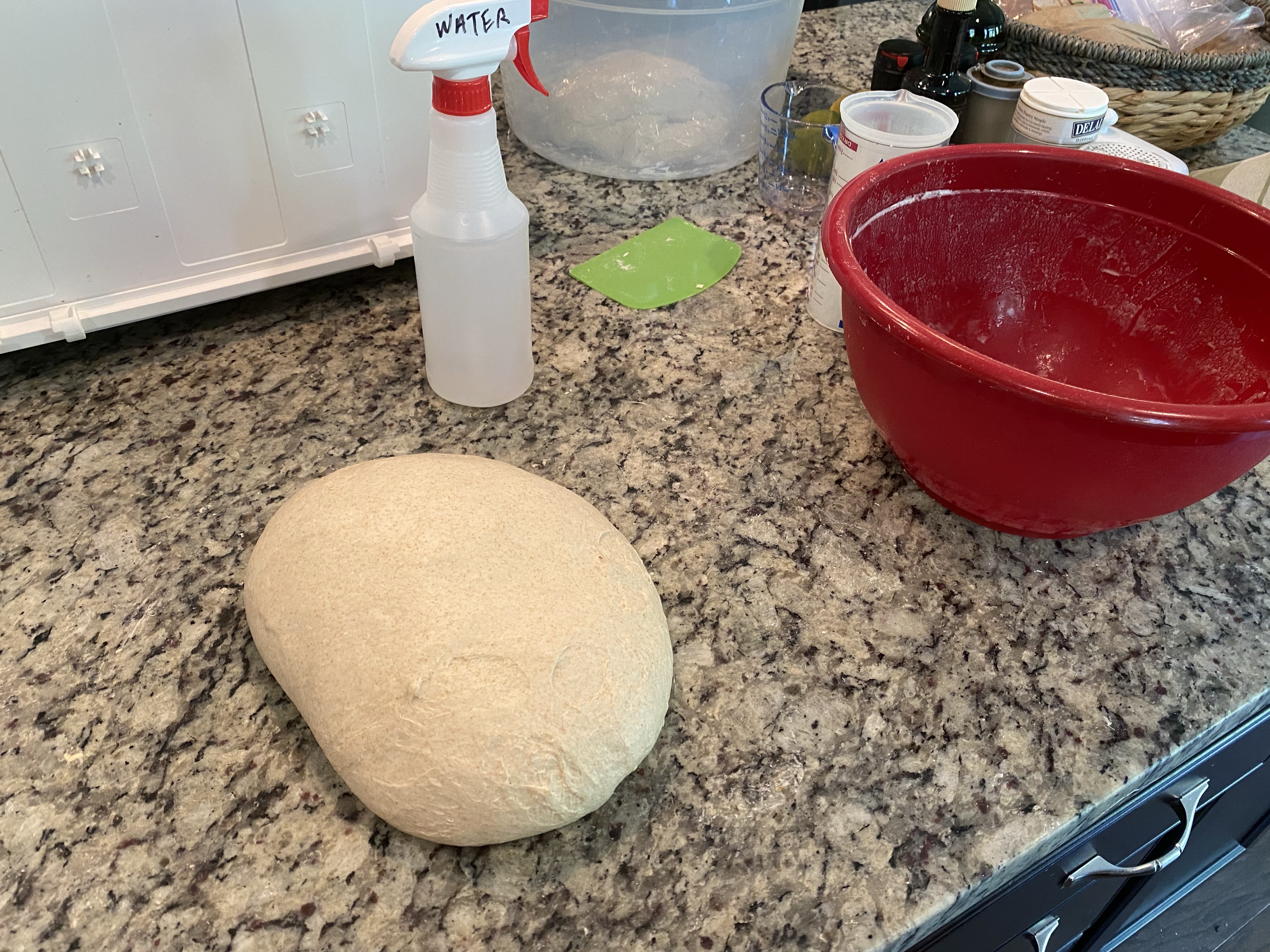
I autolysed my main flour and I’ll mix it all together earlier. I’ll see how the bulk ferment turns out.

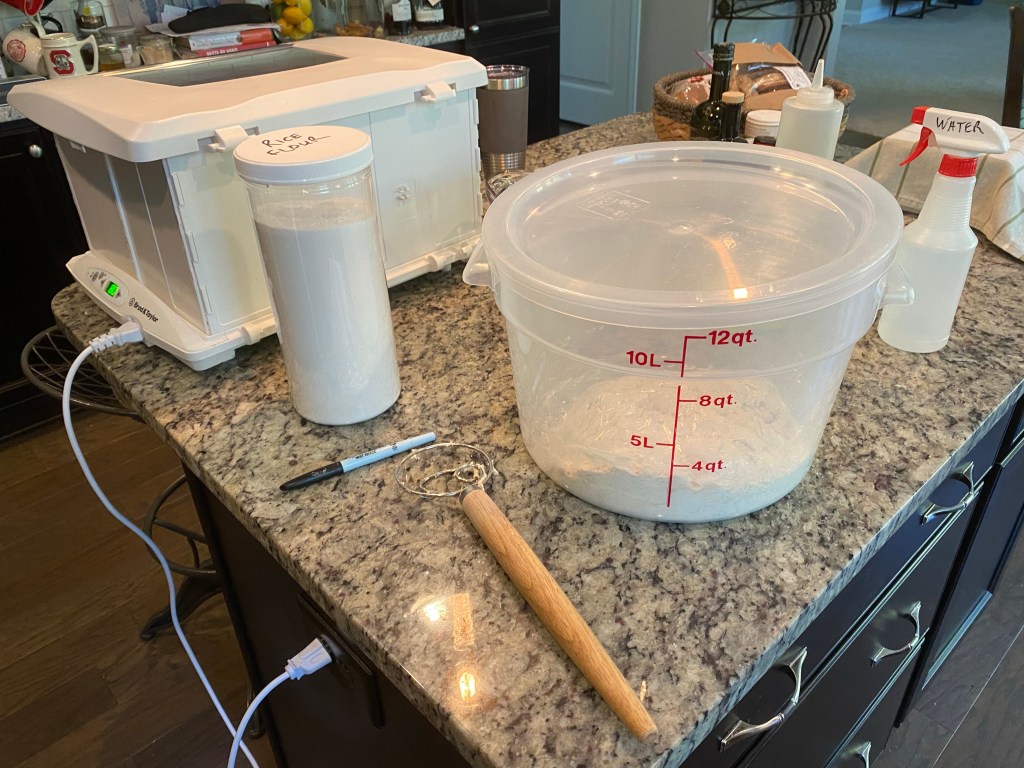
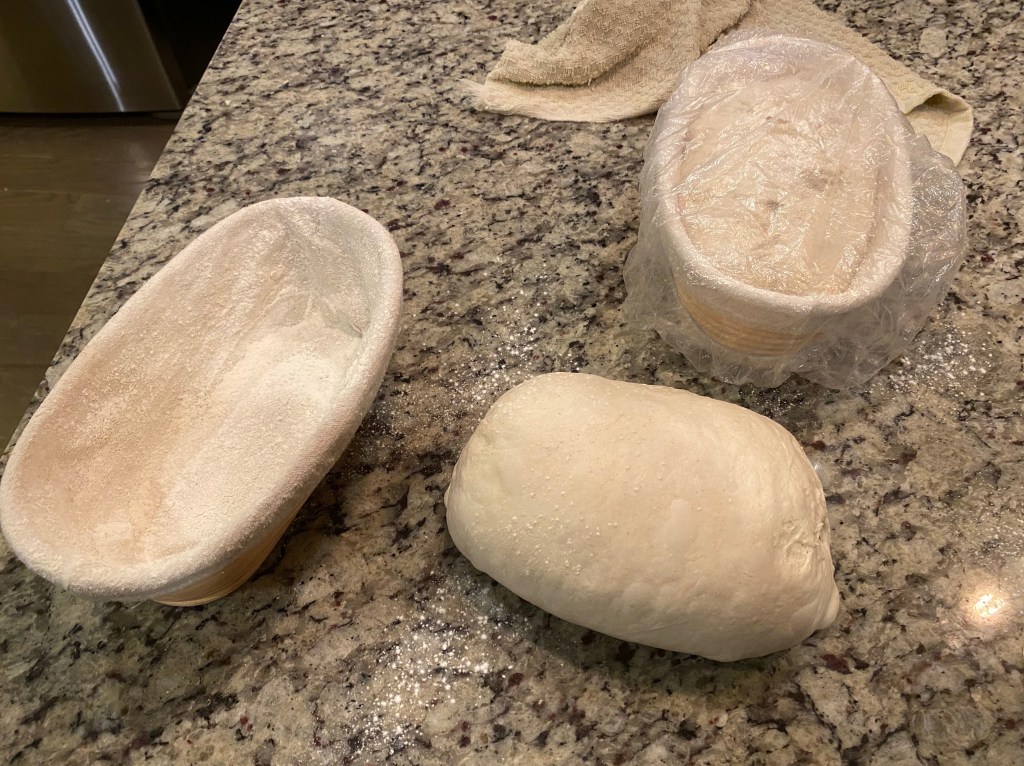
Autolyse Flour

Will just have to flex…

Sourdough Croutons

I mentioned making sourdough croutons first before turning them into breadcrumbs from day old bread (in this case my baguettes).

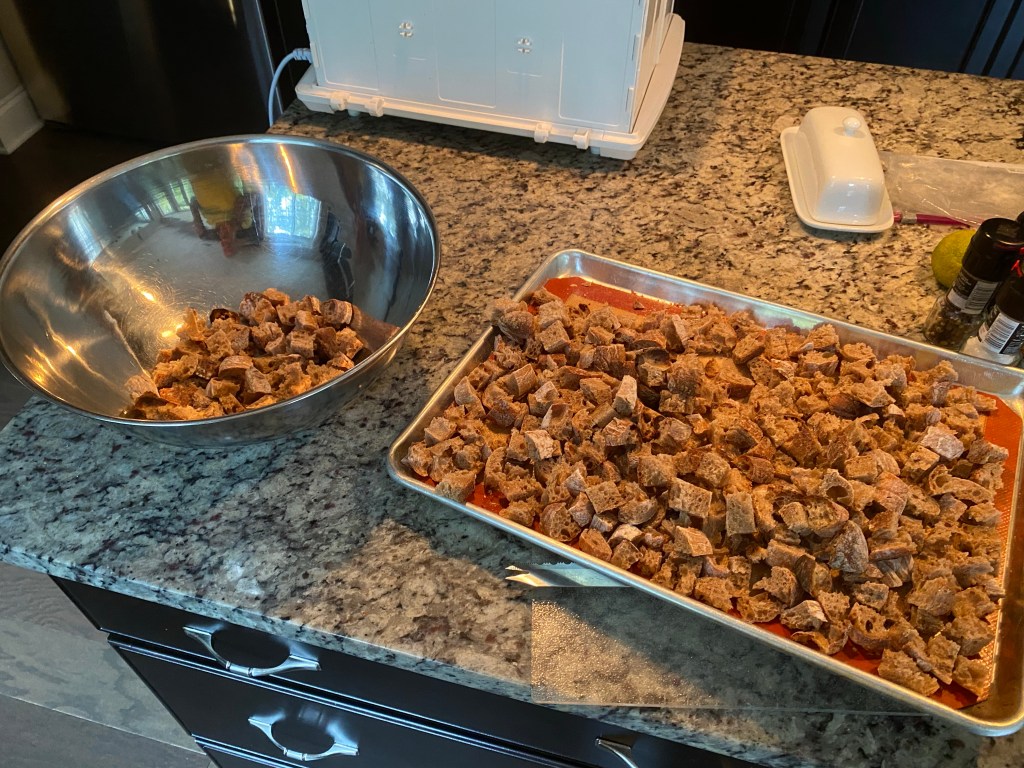
Here are some pics of the process for making the croutons

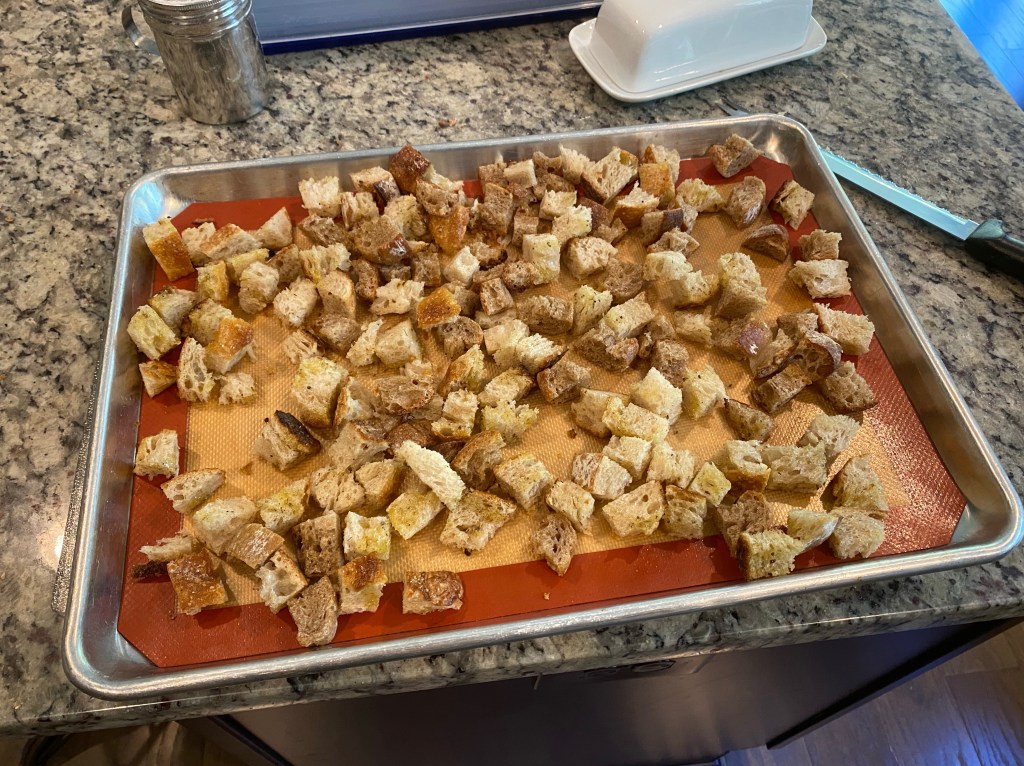
Cutting up the croutons

I cut the croutons up by slicing the baguettes (or bread) at about a finger width. I then tear the bread apart or use a knife if it a bit harder.

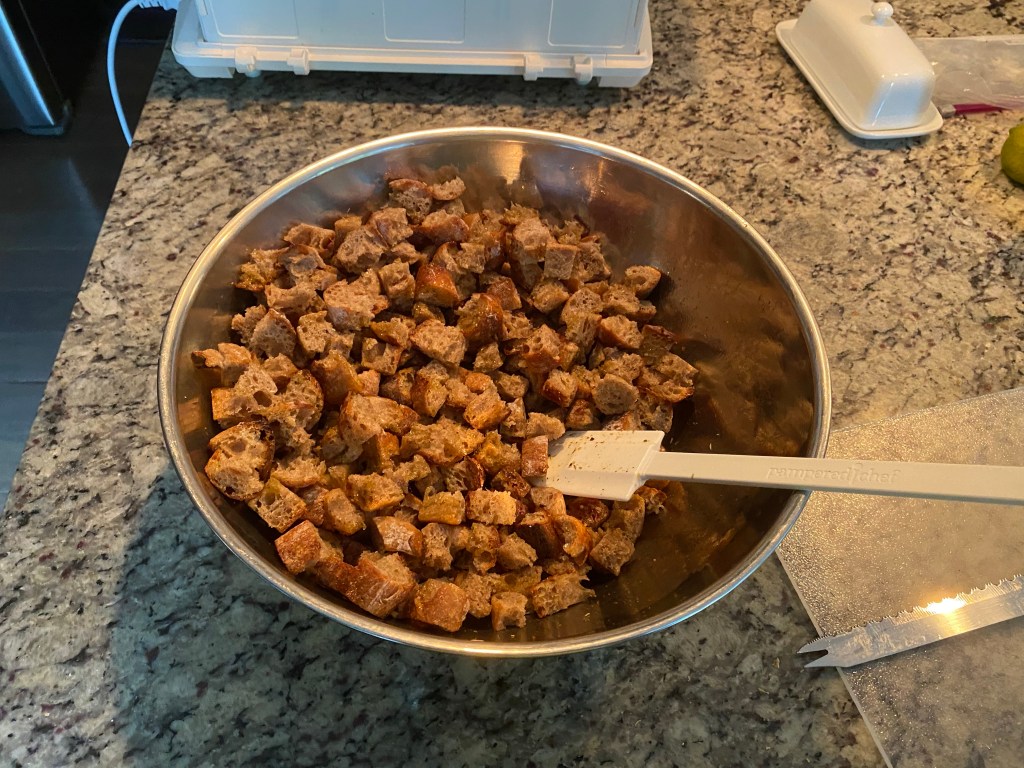
Coating with oil and seasoning

I put a couple Tablespoons of olive oil, sprinkle a bit of sea salt and about a heaping Tablespoon of Heres De Provence. I’ve used a number of different dry spices before. Just what I’m using this time. Mix together well to coat all the bread.

Ready to bake

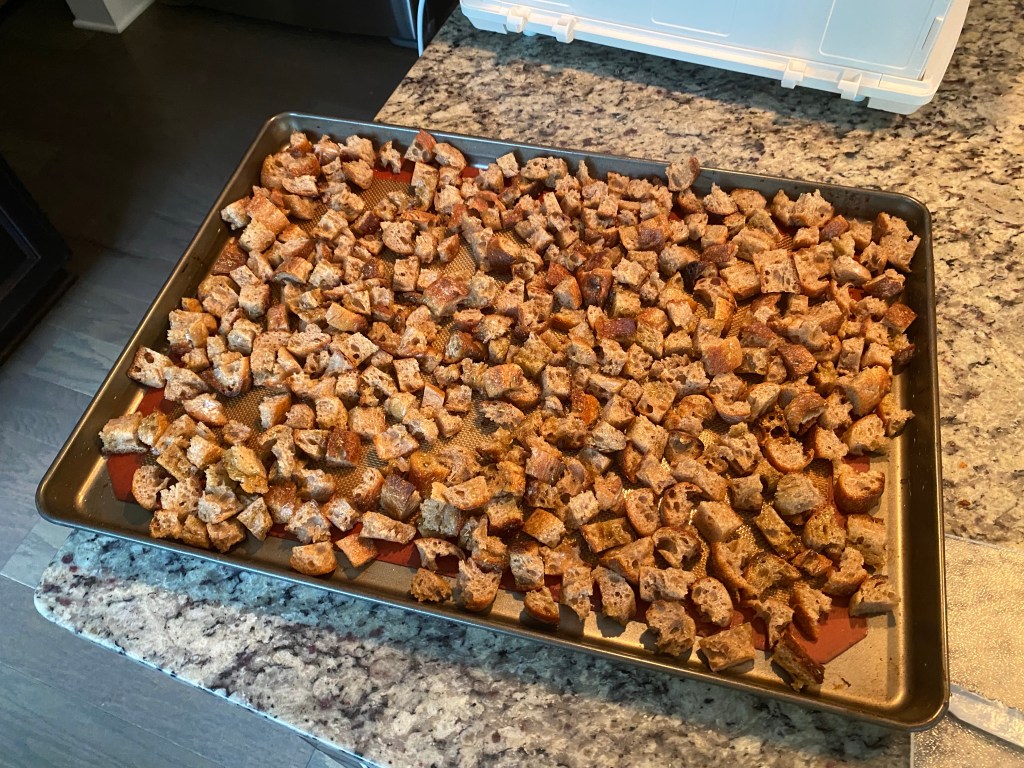
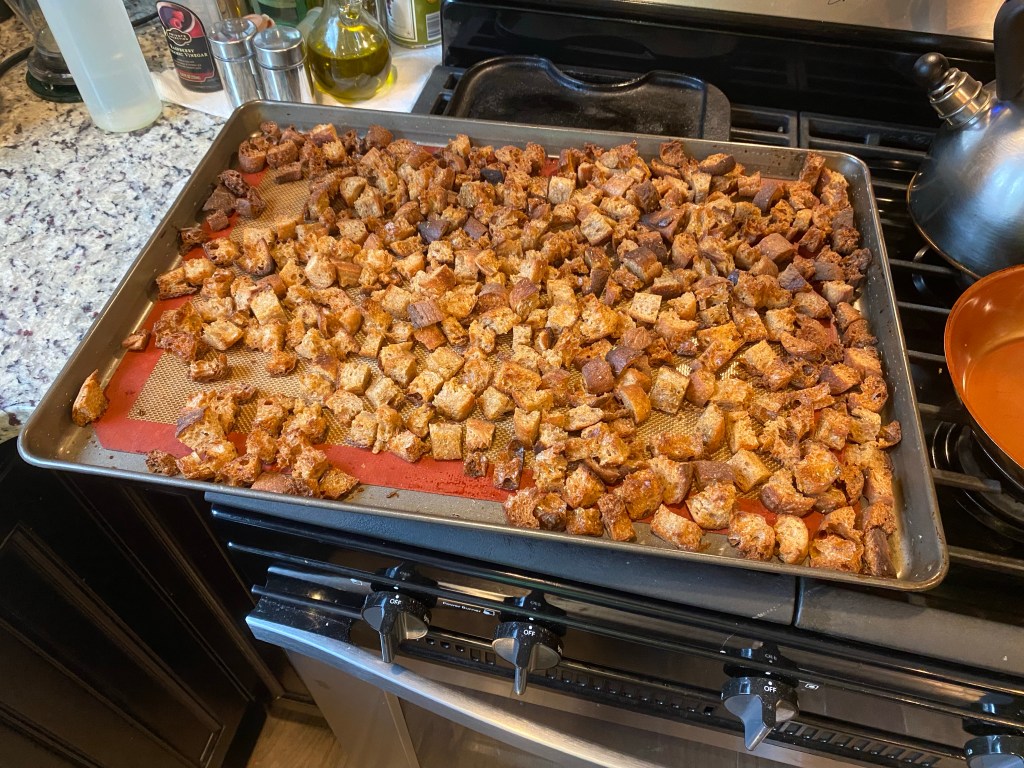
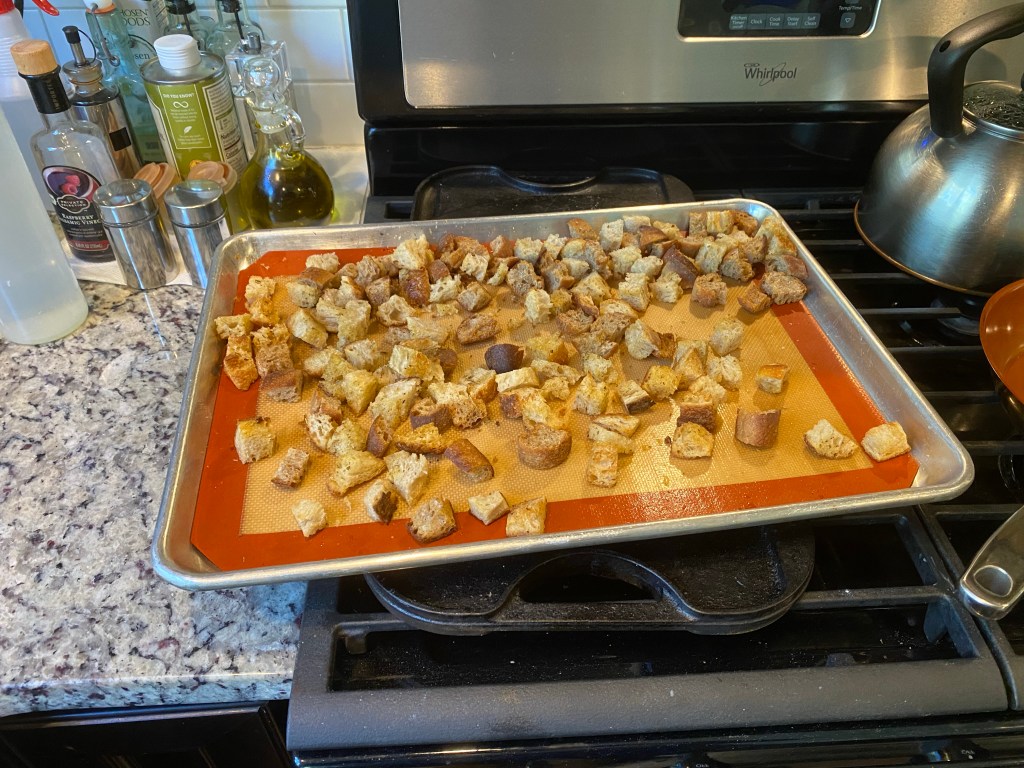
I had enough croutons to fill a full-size baking tray. I’ll bake at 400°F for about 15 minutes flight ping them around mid-bake to get a more even color.

Croutons baked and cooling

After they’ve baked I turn the oven off, crack the door and let them dry out a bit further.

UPDATE: Next time I’ll pull them out immediately after baking and NOT leave them in the oven. They didn’t burn but ended up darker than I prefer.

Good flavor and nice and crispy!

Sourdough Breadcrumbs

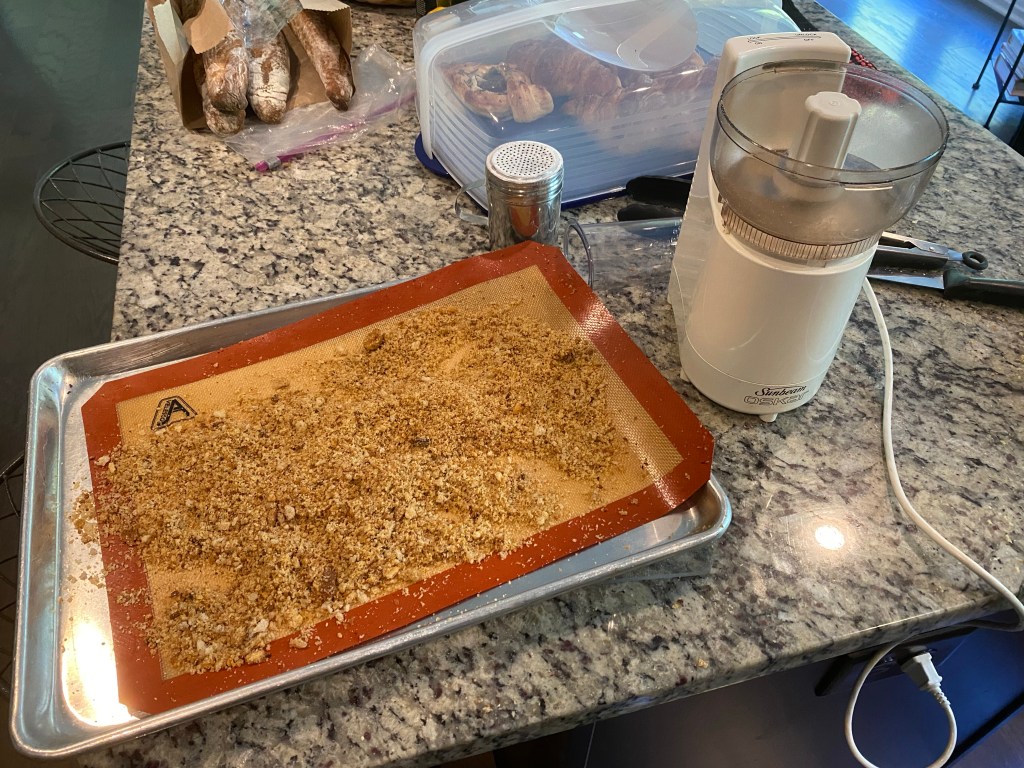
Made sourdough breadcrumbs from some day-old bread and baguettes. I mentioned that I was going to do this in my last post. Good use of older bread.

Sourdough Breadcrumbs

Process was pretty simple. First make croutons then crush them.

Cut up the bread into crouton size pieces. Add a bit of olive oil, sprinkle of salt and some sort of seasoning. I used Herb de Provenance.

Coated prior to baking

Bake at 400°F for about 15 minutes. Let cool.

Baked and cooling

I found that the best way for me to turn them into crumbs was to blitz them in my food processor. I had to experiment with my settings to get what I was looking for consistency-wise.

Anyway… that’s what I did. Pretty simple.

Going to use them as panko for chicken parm tonight! Yay!

Sourdough Baguettes Alternative Part 3

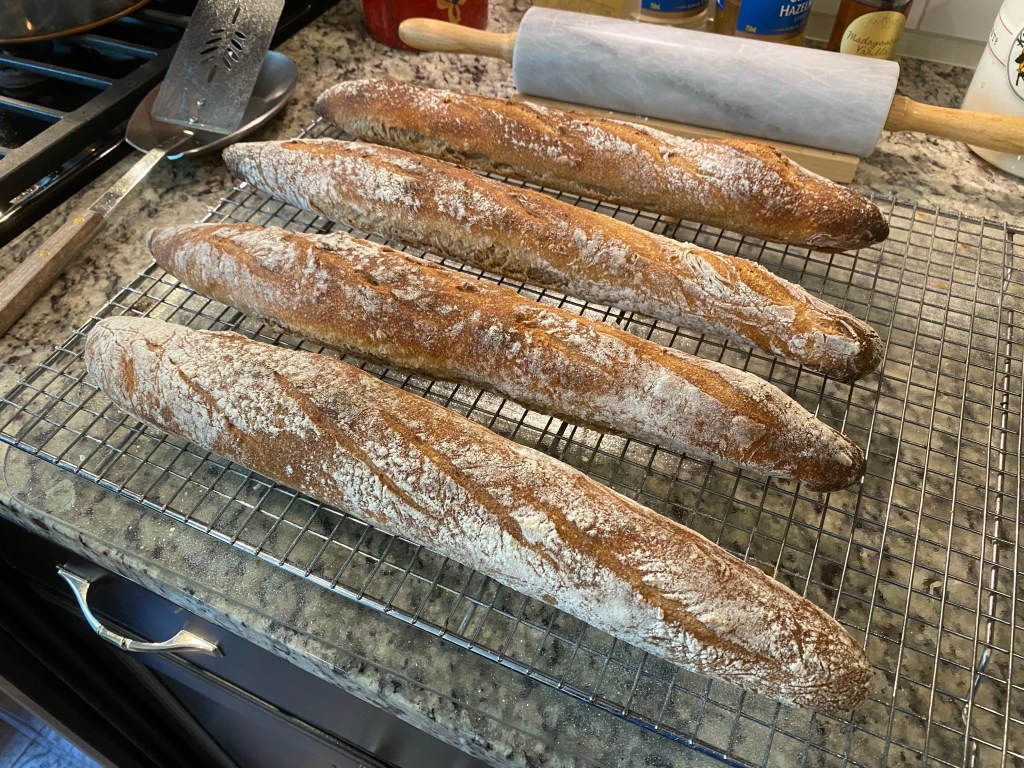
Well… they looked like baguettes (sorta).

Good thing was that I didn’t put my oven out with my massive volume of steam. Secondly, they were sized about right for my scalloped rack and not overhanging.

My wife’s comment was: “Why did you change virtually every variable from last time you attempted baguettes? Doesn’t seem like a recipe for success.”

She has a point.

Baguettes Cooling

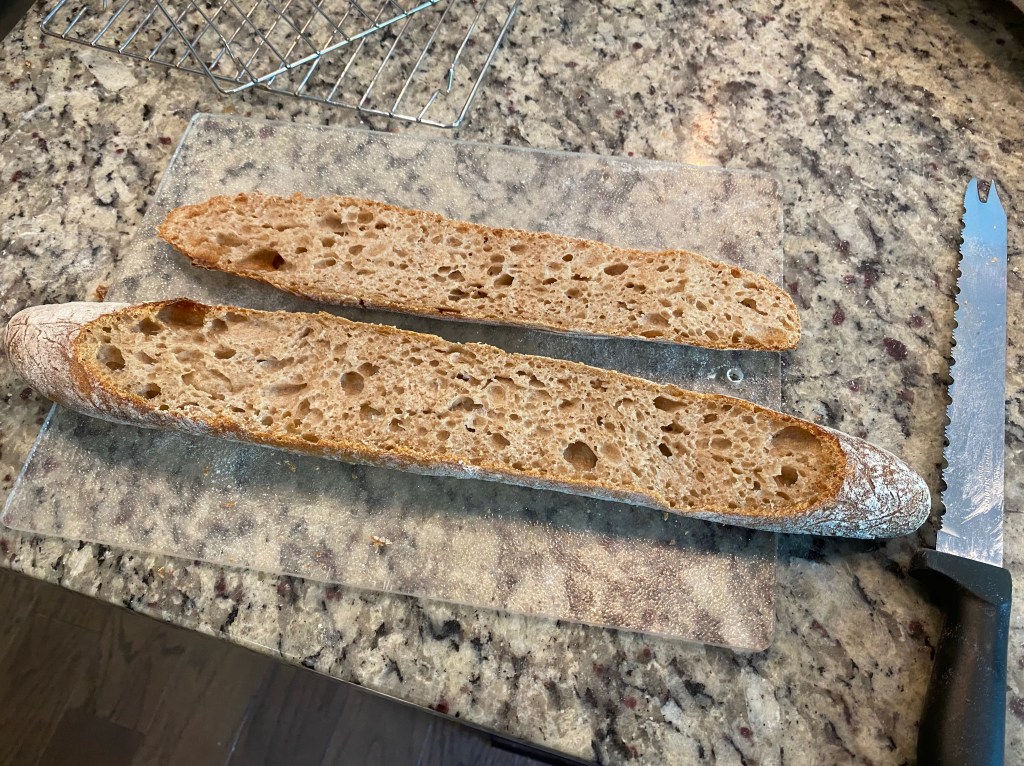
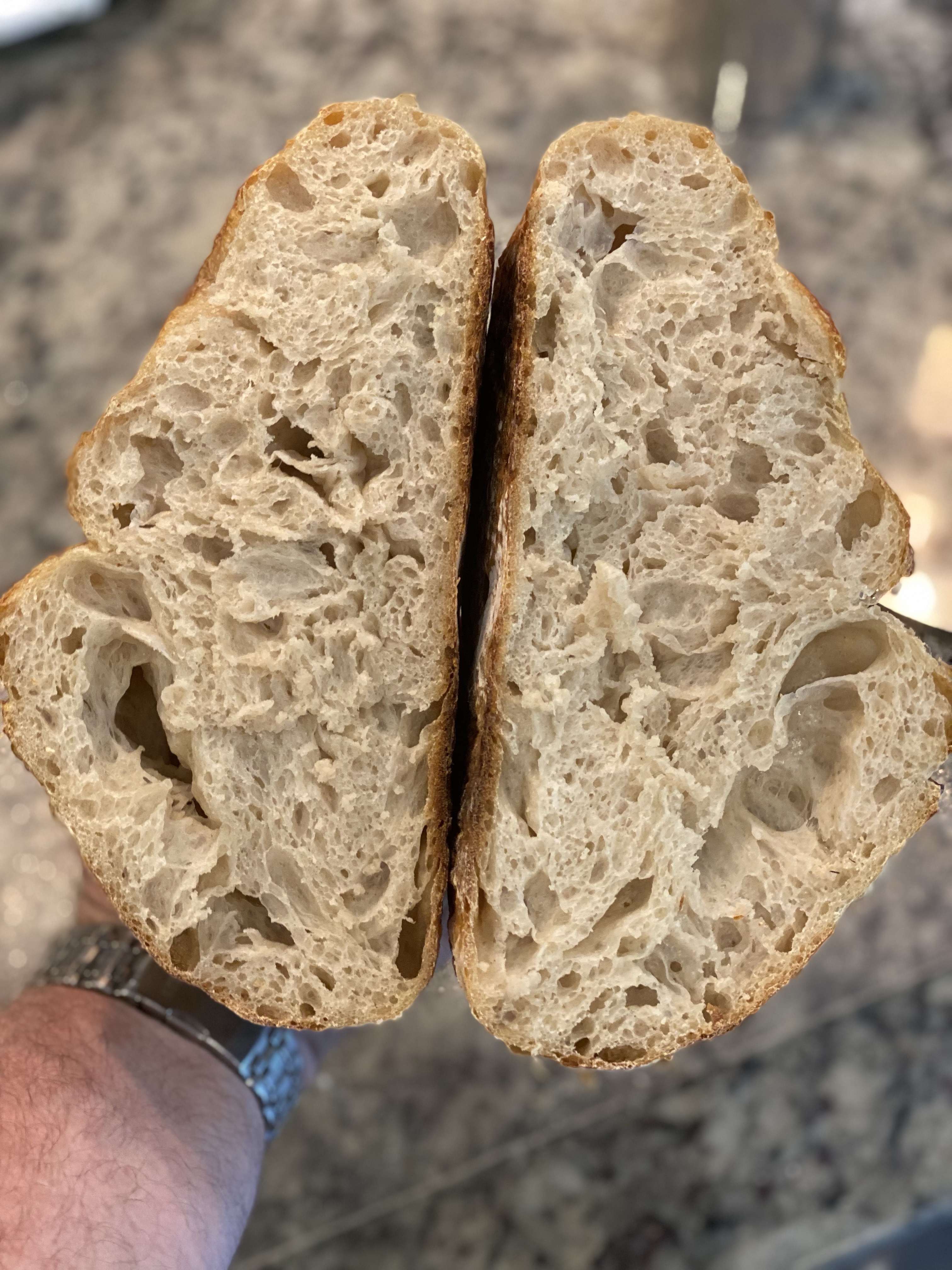
This bake didn’t have to oven bloom I expected. Probably due to my more limited steam. My steam technique needs improvement. the end result was that my baguettes were more dense and moist with a tighter crumb (smaller bubbles).

Crumb shot

The dough was more slack in the Couche. It also stuck. I haven’t been using rice flour. All the other bakers I see talk about using rice flour in their bannetons and on the Couche. I ordered some from Amazon after I couldn’t find it in my local grocer. Hopefully it will keep my dough from sticking to the cloth unlike what happens currently with AP flour.

I’ve also seen from some other bakers I follow on how to not waste bread. I’m going to cut these baguettes up and make croutons which I will then crush and bake breadcrumbs. All’s good!

I will go back to the other process with the combined leaven and poolish and focus on mastering that recipe and method.

I’m not going to let it get the best of me!

Sourdough Baguettes Alternative Part 2

Today is the day to bake baguettes! I’ve been juggling baking schedules in my head since today I’m baking not only these baguettes but sourdough loaves and croissants as well!

My morning started out with baking my bread. I’d preloaded my Dutch Ovens and set my oven to preheat this morning. All I had to do this morning was get them out of the fridge and score before popping them in to bake.

At the same time I got my croissants from the fridge and placed them into proofing bags so they could rise. Normally this is a four hour+ step meaning I’d be baking around noon.

Noon is also the time I need to get my baguettes into the Couche to proof since I’d like to begin baking them at 2pm since I’ve an event at 4pm that I need to attend.

That means at 11am I need to have the baguettes preshaped shortly after 11am since the method has them bench resting unfloured and uncovered for 45 minutes.

Juggling the baking schedule is normal…

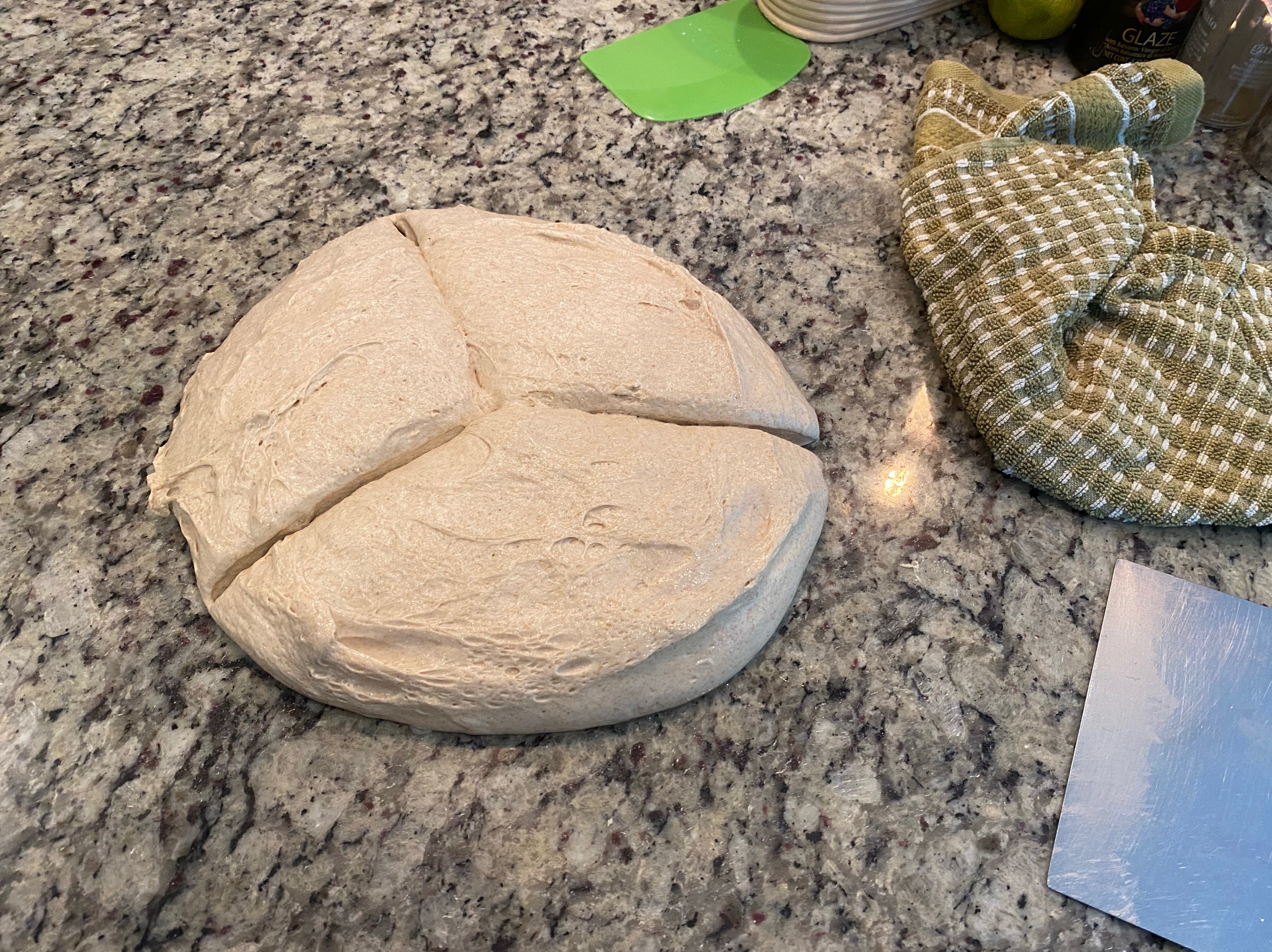
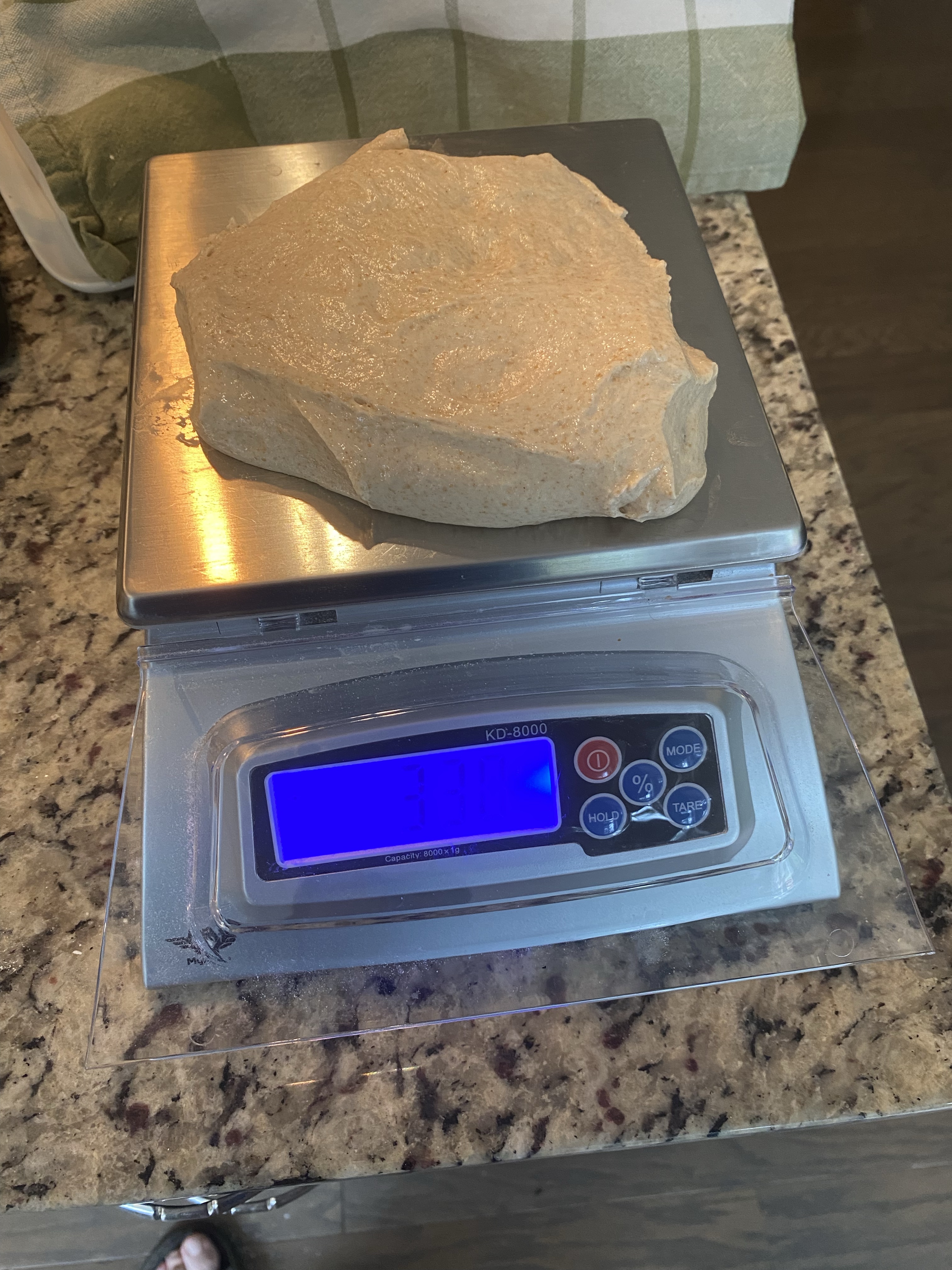
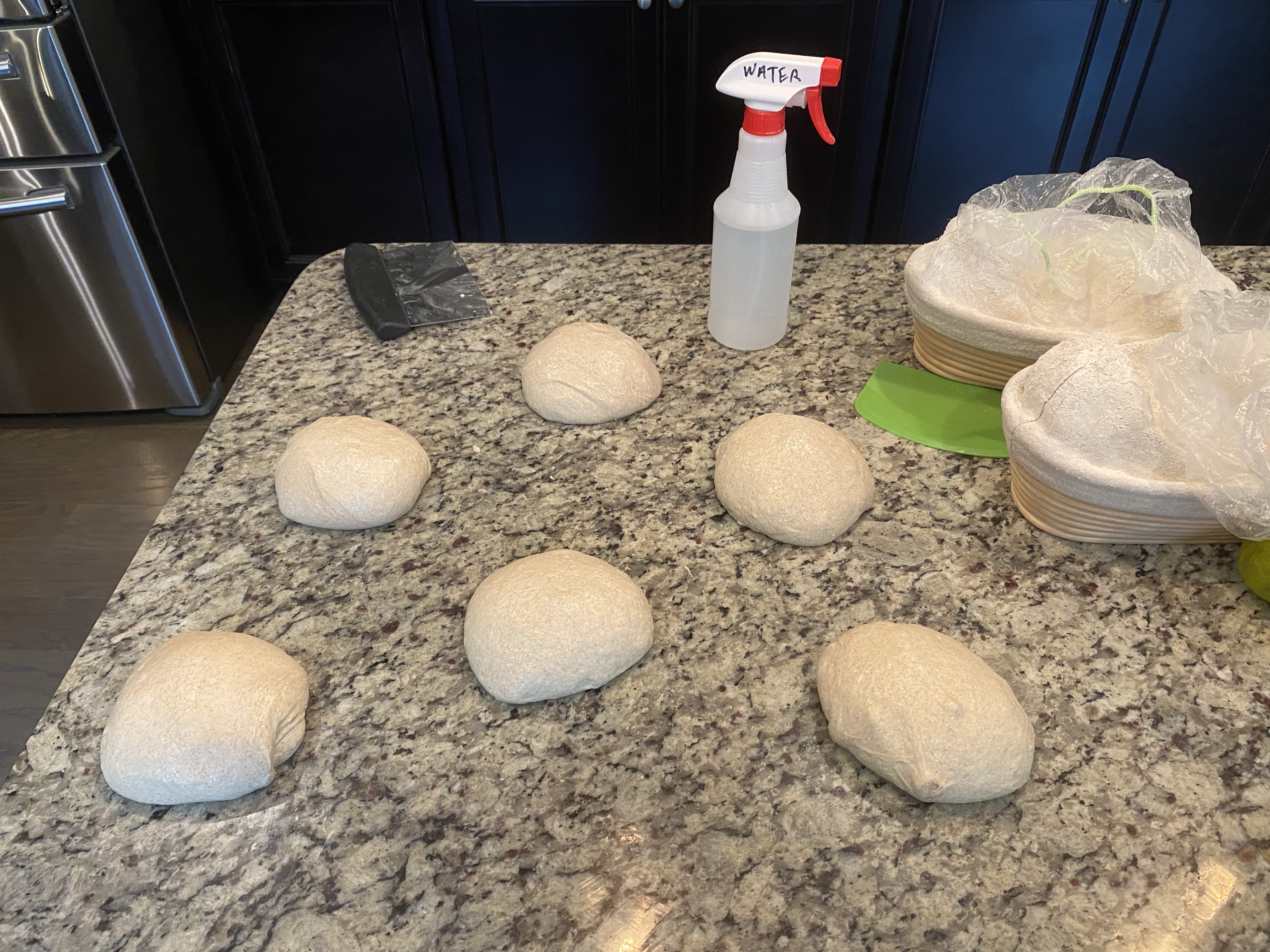
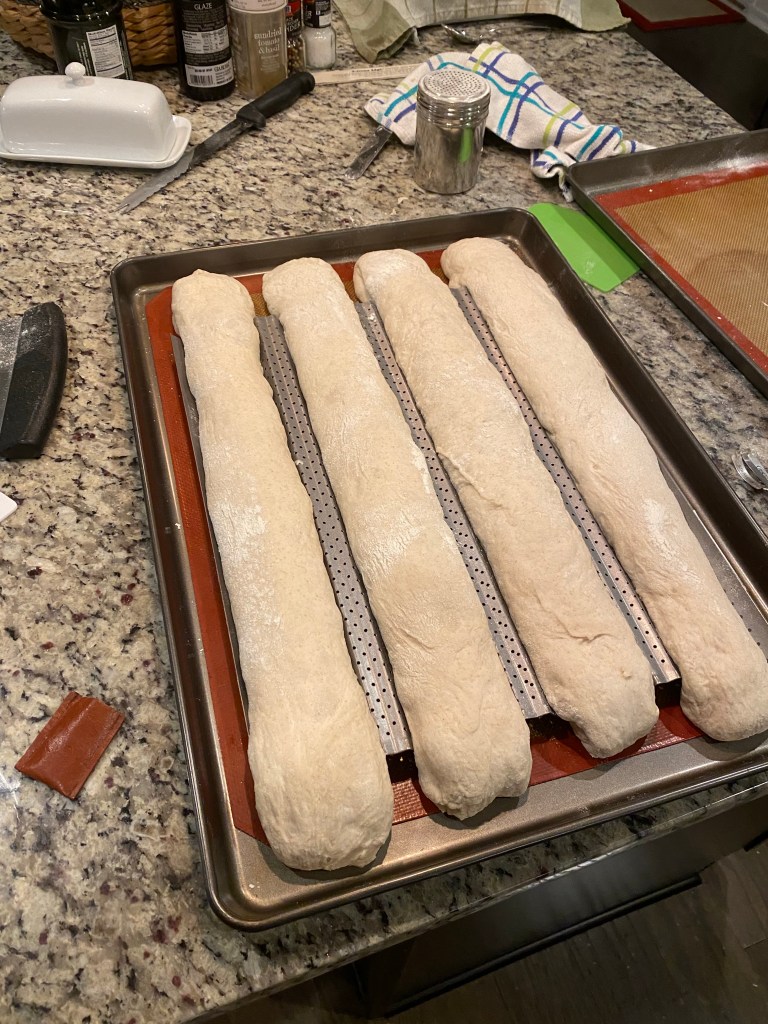
Here is my preshaping of the baguettes. Basically it was simply dividing them into six (6) 330g rounds and then letting them bench rest for 45 minutes.

It’s going to get busy here shortly…. And ll take more pictures and convey more in subsequent posts. Stay tuned…

Sourdough Baguettes – Different Approach

Time to try making Sourdough Baguettes again. This time I’m going to try a different approach. I’m using Joshua Weissman’s recipe and method described here

This is a couple day process. I’m actually running it in parallel with my normal sourdough bread AND a batch of sourdough croissants!! Wow… look at all the baking going on!

As a side note I’m wearing my Swedish Chef shirt. I had a woman mention it and she said “I don’t understand what he’s saying”. I told her it was Swedish but if she tried saying it out loud she might get the gist. after a brief pause she said “Oh my!” Ha!

Swedish Chef T-shirt

Anyway… Day 1 is simply feeding my sourdough starter. I did that last night.

Day 2 initially begins by taking the 100% hydration starter and making a 50% hydration stiff Leaven.

Stiff Leaven Recipe

  • 28g Bread Flour
  • 20g Whole Wheat Flour
  • 24g Sourdough Starter (100% hydration)
  • 28g Water

To calculate that the stiff hydration level you add the gram weight of the flour plus half the gram weight of the starter: 28g+20g+12g=60g. The water weight is 28g+12g=30g. The flour gram weight is the constant or 100%. The water is half the weight of the flour so the hydration is 50%.

The stiff Leaven is put into the box to prove at 80°F for a couple hours.

About an hour before it is ready I began to autolyse my dough. Basically just mixing the water and flour together to introduce the to each other and then let sit for an hour to let the water soak into the flour.

Dough Recipe

  • 732g Bread Flour
  • 313g Whole Wheat Flour
  • 778g Water (90°F)

Once the stiff leaven has doubled break it apart and spread over the autolysed dough. Sprinkle 20g of salt over the dough, dimple and add another 100g of water to the mix. Incorporate by hand squishing it all together. It’s a sticky mess!

Once the water is mixed in dump on the counter and perform “Slap ‘n Folds” for a couple of minutes. It should only take 1-2 minutes before the dough is cohesive and not sticking to counter. Put back in bowl and let rest in box (80°F) for about 15-20 minutes to relax.

After the last Slap ‘n Fold place the dough back into the proving box for another 2 hours. Perform Stretch ‘n Folds every25-30 mins for the first 75-90 mins.

Once that is done seal the bowl airtight and place into fridge for 18-24 hours to cold bulk ferment.

We’ll see what this dough looks like tomorrow!!

No mixer used at all…

This time I made bread by hand without using my KitchenAid mixer at all

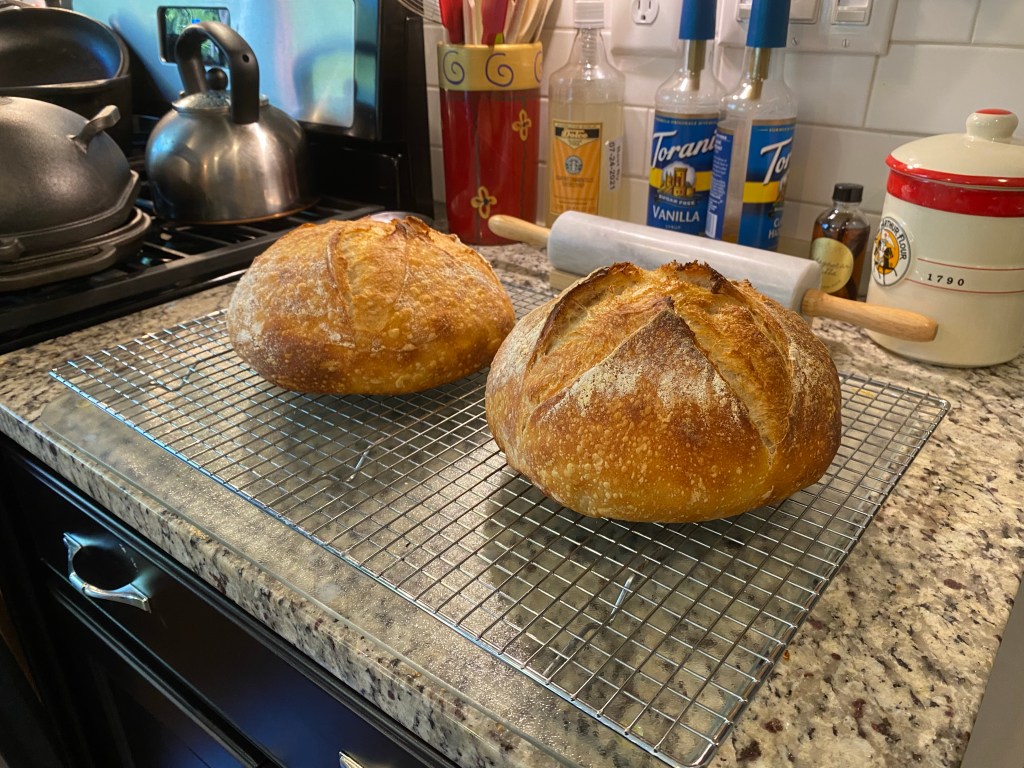
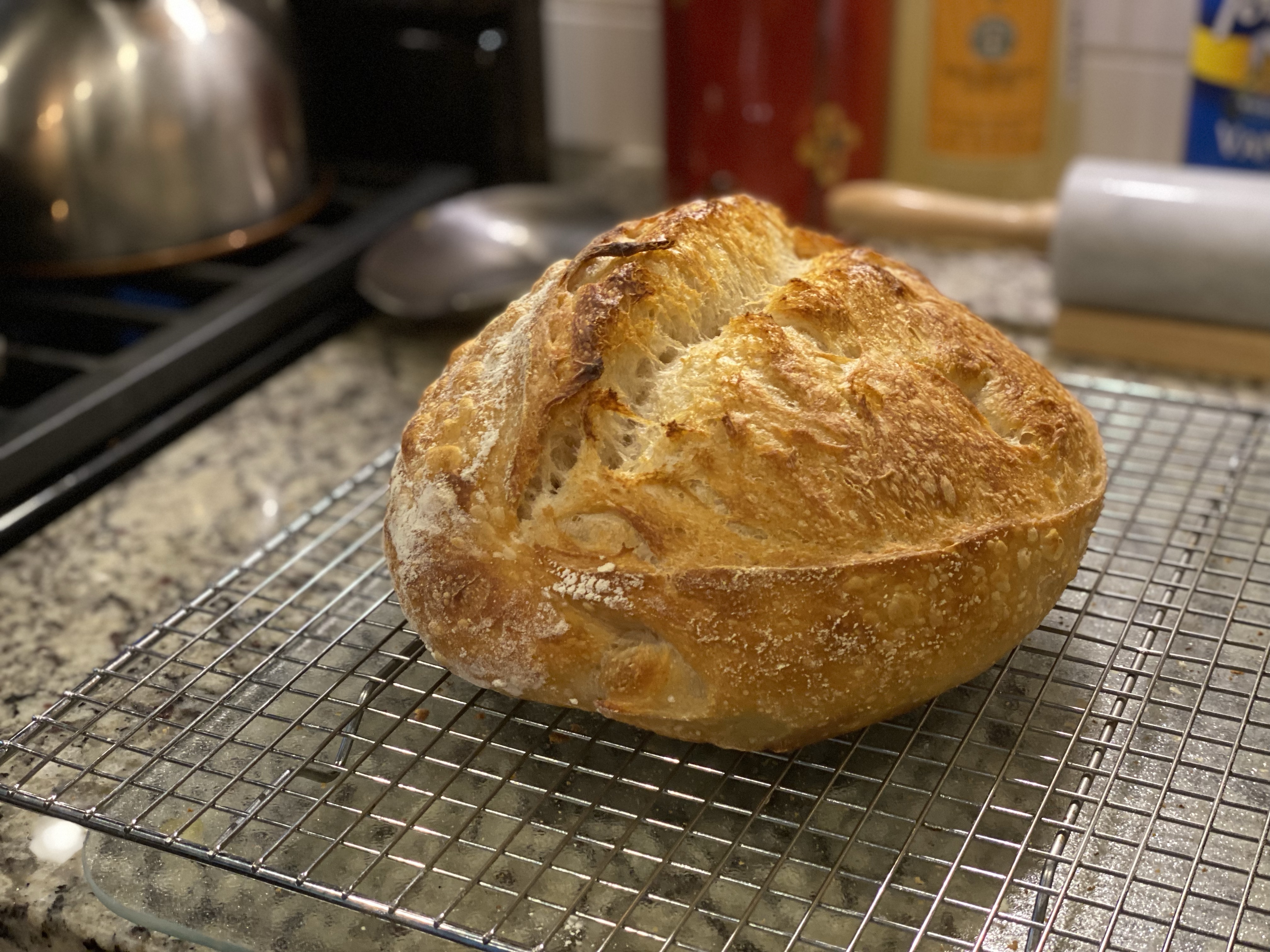
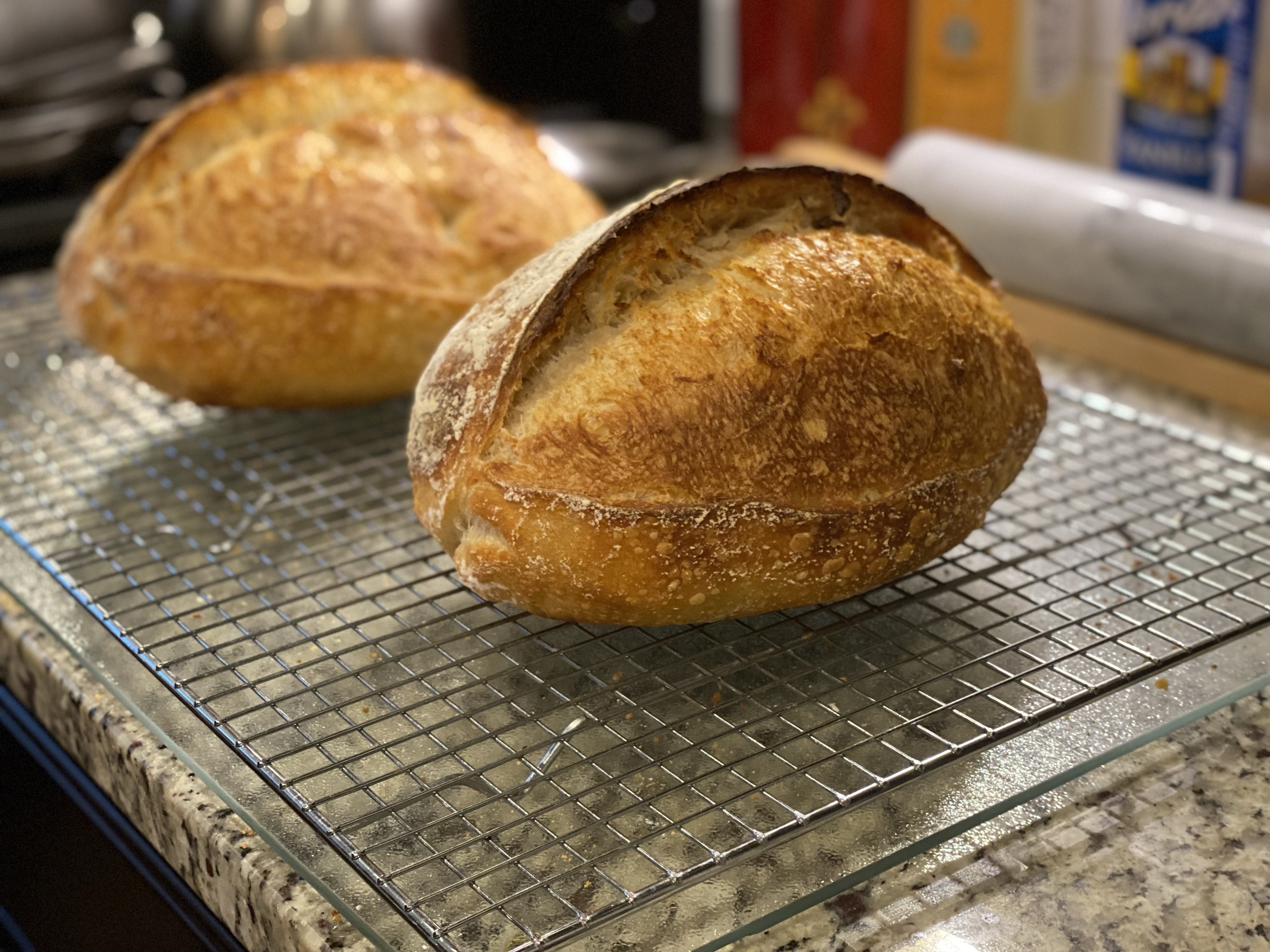
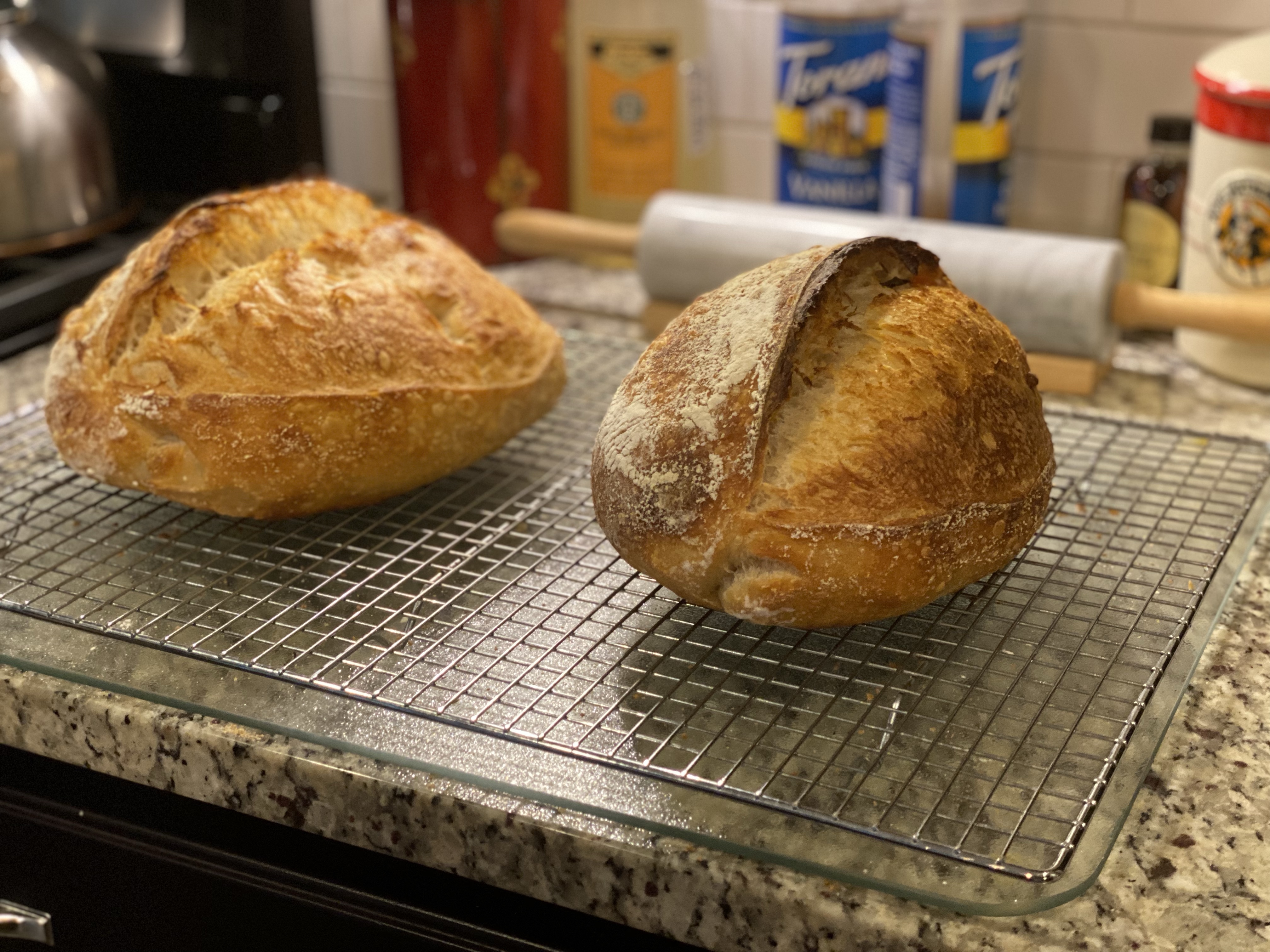
Sourdough bread cooling

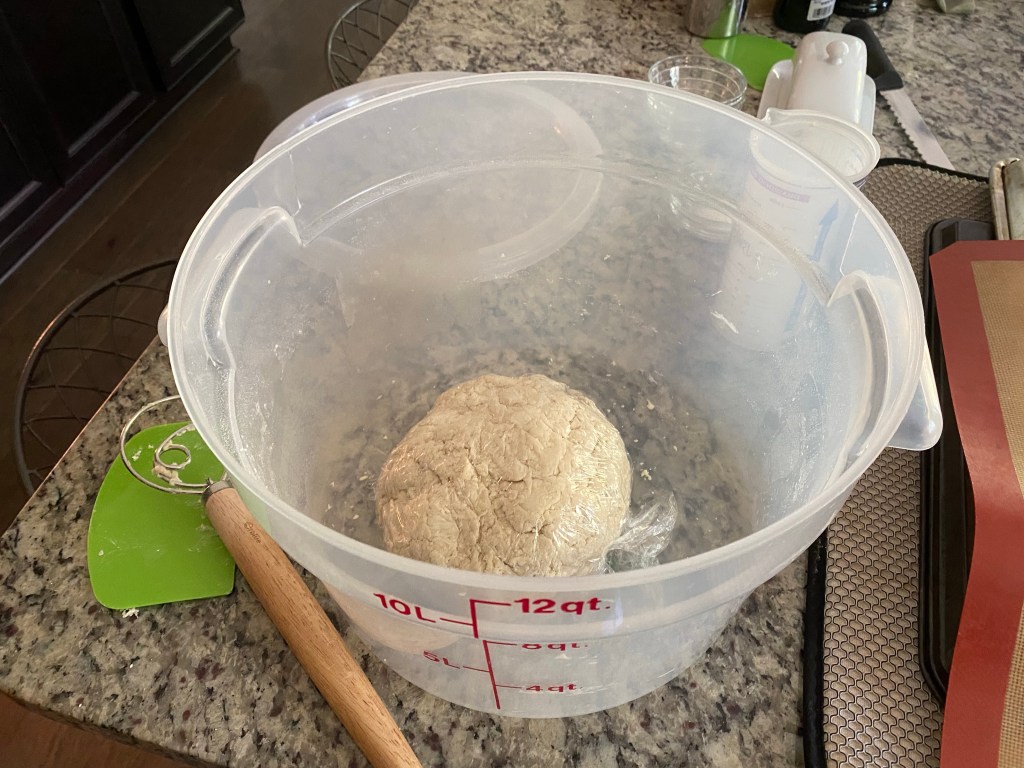
I went straight to my tub and mixed the flour and water to begin the Autolyse process. using my Swedish dough hook I mixed in the water, formed a ball, spritzed with water and covered with cling wrap.

Mixed and covered with cling wrap

I’ve mentioned before about how extensible the dough becomes after a few hours. Don’t believe I’ve ever posted a video to show. Check this out:

Dough Extensibility after Autolyse

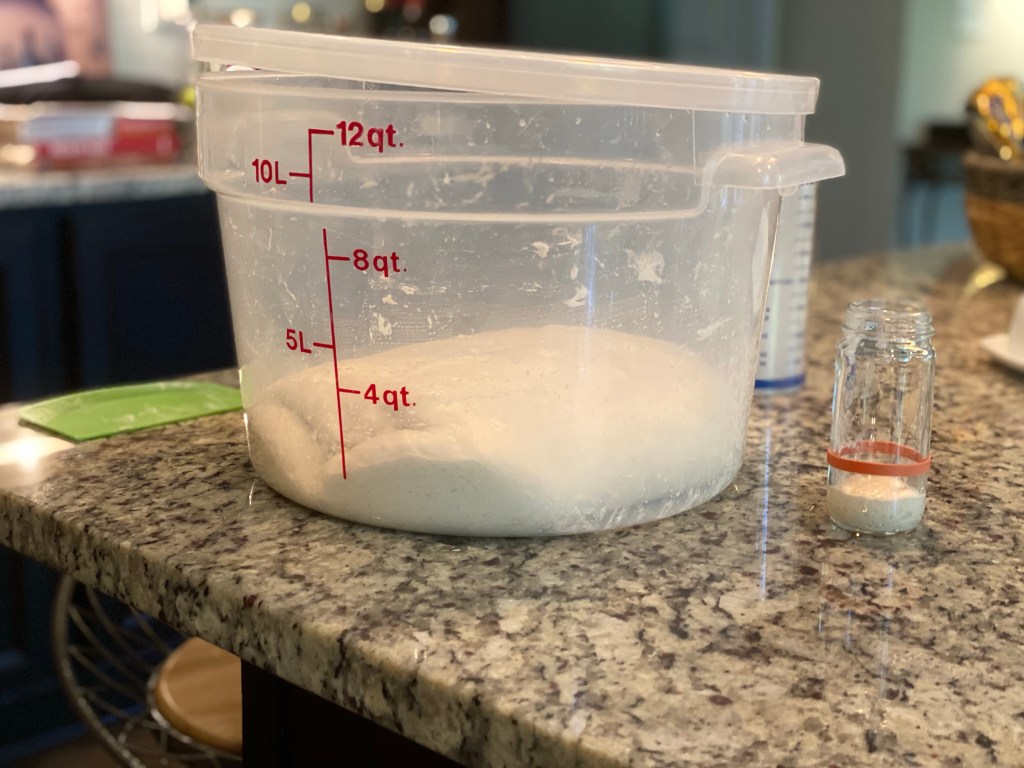
I mixed in my leaven by hand (quite gooey). As part of the first coil fold I mixed in the salt. After that I coil folded the dough every 30-40 or so (4x total). After that I left it to bulk rise judging using my Aliquot jar.

Using Aliquot Jar

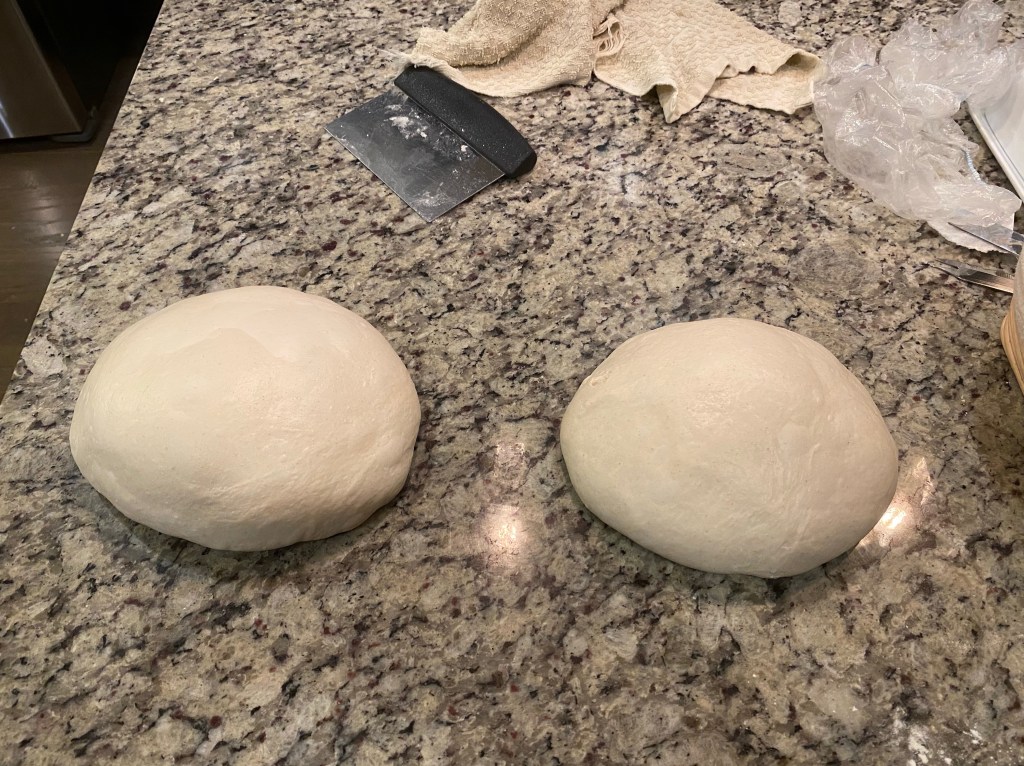
Once bulk finished I split the dough, preshaped and let bench rest for 30 minutes. I then shaped into Boules (rounds) and plopped them into their bannetons to rest covered in the fridge overnight.

The dough was noticeably more pillowy during shaping.

I scored and baked in the morning. I did realize that I needed to swap out my razor blade. Slashing was more difficult than normal. I think that is the reason for less bloom on the left loaf bread n the first picture.

I’ll update with a crumb shot later after they cool. I’m very interested in the crumb structure.

Limiting Mixer Use

I saw an Instagram post recently by Kristen Dennis @fullproofbaking. In her post she ran an experiment contrasting the use of her KitchenAid mixer vs hand folding. Her hypothesis was that the mixer resulted in a much tighter crumb structure and a more limited oven spring.

The crumb structure she posted for her bread kneaded with the mixture looked exactly like my bread’s crumb. I thought I might try an experiment and see for myself what differences I’d have.

I used my standard recipe. My method only changed by limiting the use of my KitchenAid spiral hook at the lowest speed for 2 minutes when I added the leaven.

I added the salt by hand and coil folded every 30-40 minutes for the first 3 hours of the bulk ferment. I judged the bulk prove using my Aliquot jar.

Bulk prove using an Aliquot jar

I divided and preshaped my loaves after the Doug had doubled in size as indicated by my Aliquot jar.

Preshaped sourdough loaves

I did notice that my dough was much more “pillowy”. After 30 minutes I shaped the dough gently so as not to degasse them and place them into bannetons to cold ferment overnight.

Shaped loaves going into bannetons

The loaves were more jiggly than I remembered from my previous loaves.

Wobbly sourdough loaves

I baked in the morning using my preheated Dutch Ovens. I’d placed them in the oven the previous night and had set the oven to come on early in the morning.

One of the loaves I tightened by stitching before turning out of the banneton and slashing. The other I turned out “as is” and slashed.

I baked them per my standard method and was quite pleased (and surprised) by the results!

The loaf that I stitched had a similar look, bloom, ear and surface texture to loaves I’ve baked before. The other spread and looked almost like it ha a double bloom.

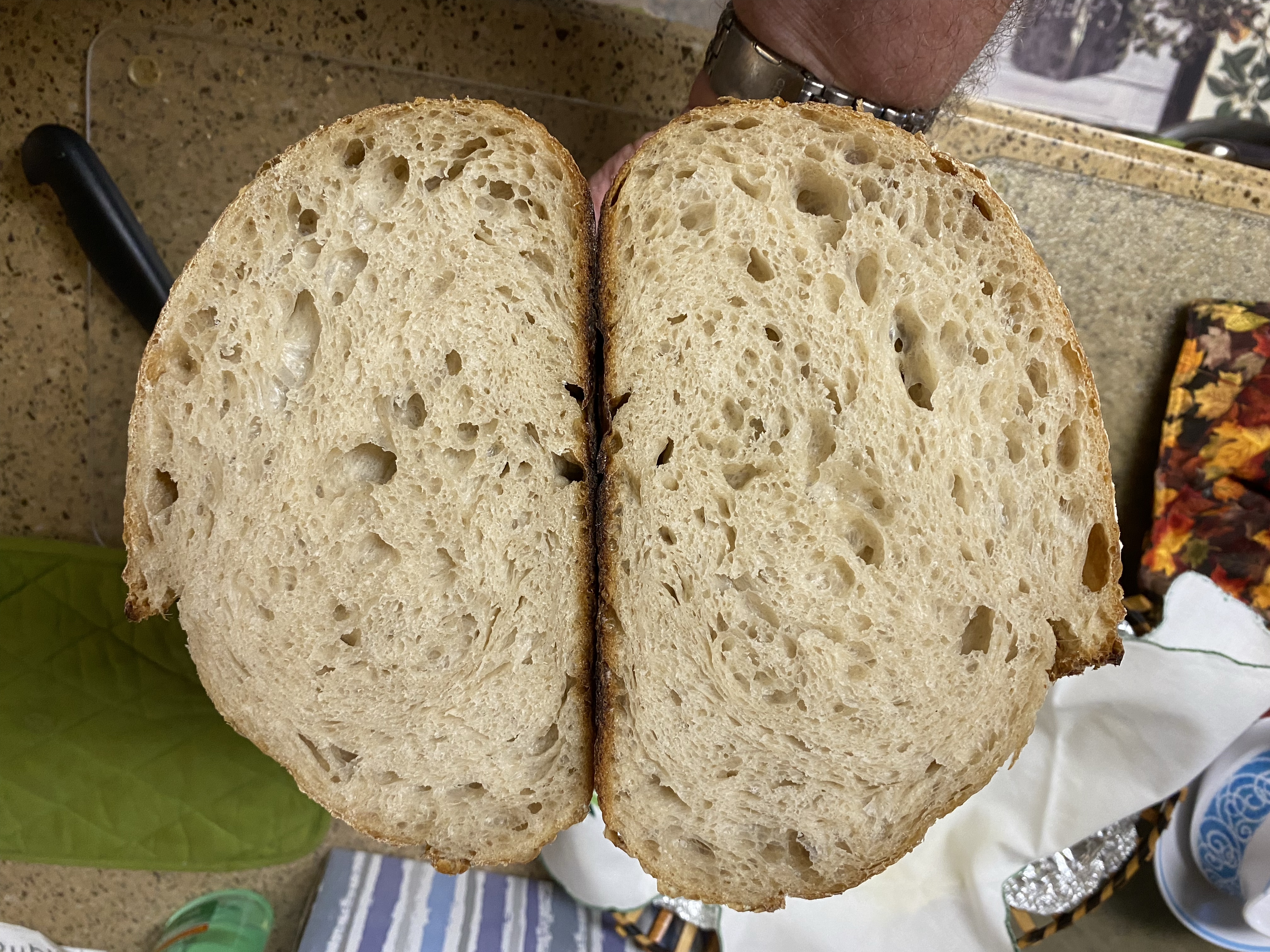
The crumb was a bit more open than before… larger pockets.

Happy to have tried this experiment. I think I’ll do it again to see if I can get some consistency.

Sourdough Baguettes (Part 6)

Ok…. This post is why I started this string of posts in the first place.

On my journey of learning to bake sourdough I’ve come to realize it is a mixture of science, art (sometimes black art), whimsy, luck and my ever-present Sous Chef (do bakers even have these?) Murphy.

Baguettes about to be baked

I’ve gone through all the effort to get these loaves to the moment of baking. The oven has preheated, I’ve a sheet pan already in the oven to help me generate steam and water be a pot of boiling water ready to dump in so there will be lots of steam for my crust early in the bake.

I pop them in the oven, pull out the tray a bit and pour in the boiling water. Whoosh! I’ve more steam than I even imagined possible. I slam the door shut and think “success!”.

Murphy is snickering behind me unnoticed.

At about the 20 minute point I pop the door open and pull out the water tray. As expected the tray is virtually dry. The loaves have risen but not as I had hoped. There is some color so I think “First attempt…don’t over bake and burn them!”. I add another 15 minutes onto the timer and wait.

Time passes and I go to check the loaves by cracking the door and checking them. The color is virtually unchanged. I check the oven and it says 420°F Convection. I add more time.

Timer goes off. I check the loaves. No color change. They’ve been in the oven 50+ minutes at this point. The oven says 420°F Convection. I open the door further and poke the loaves with my finger. They’re squishy and they’re unbaked!!!

(Here’s where a Minion asking “Whaaat?!” Would be appropriate)

My oven is OFF!

Murphy starts slapping his knee, laughing uncontrollably and falls to the floor rolling around gleefully.

Aaaaaaaggggghhhhh!!!

Evidently my burst of steam put out the oven flame. It indicated as on at the temperature but was just cooling down. I hadn’t noticed when I pulled the pan out initially. Come to think about it I hadn’t noticed that I had no rush of heat to my face when I had cracked the door to check the next time. Note to self!!

I reset my oven and set it to 450°F convection and left the bread. My thought was to take them out when the oven got to temp.

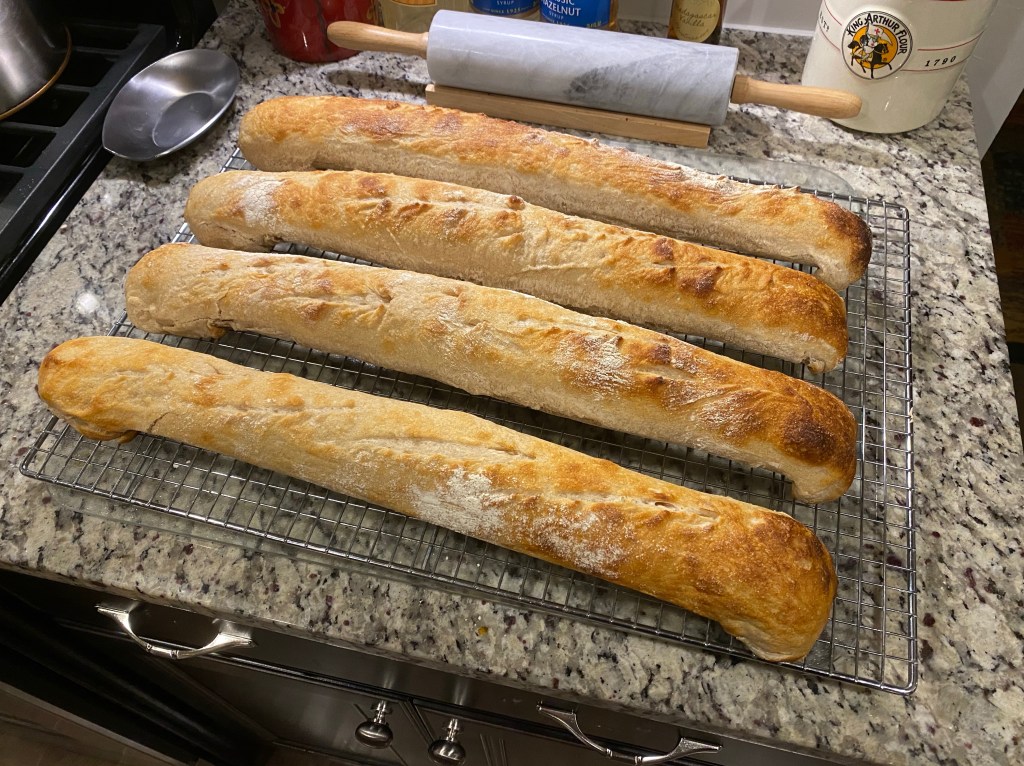
Baked (finally) baguettes

THAT was a learning experience!

For all my baking travails they came out OK. They tasted really good and I learned a number of things on this bake. I was actually pleased that I was able to recover and get edible baguettes despite my errors.

#AlwaysLearning